What should a window appointment setter say on the phone?
Call the lead back fast, keep the call short, and get three things: what's wrong with the windows, who decides, and a time when all of them are home. Speed matters: in the 1.25 million-lead study Harvard Business Review reported, firms that reached out within the hour were nearly seven times as likely to qualify the lead as firms that waited one hour more1. What to do in those first minutes is in speed to lead for window companies.
Use the call to learn what you'd otherwise find out at the table. A sales trainer writing in JLC makes the point for window and siding companies, which rarely get a second call: gather information over the phone when the lead calls in2. Confirm the day before, by call or text, and check again that every owner will be there. The confirmation call, no-shows and one-owner appointments are covered in window appointment setting.
Know the calling rules before you dial. The FTC's Do Not Call FAQ says a company may call someone for up to three months after they make an inquiry, even if their number is on the national registry, but may not call anyone who has asked to be put on the company's own do-not-call list3. Cold calls and automated texts have stricter rules. This is general information, not legal advice; check your state's rules, and your lawyer, before you set up calling.
Calling back a new window lead
"Hi, is this [first name]? This is [your name] with [company]. You asked about replacement windows on our website a little while ago. Do you have two minutes?"
"What's going on with your windows? Which ones bother you most?"
"Is it the whole house, or a few rooms? Roughly how many windows?"
"Who else lives there and would want a say? The visit takes about an hour and a half, and it works best with both of you there the whole time, since you'll be choosing together. What evening works for both of you?"
If they ask for a price on the phone: "I'd only be guessing, and a guess would be wrong one way or the other. Sizes, the condition of the frames and the options you pick all change it. You'll get a firm written price once I've measured."
If they push for a number: "Most jobs like yours land somewhere between [your honest range for a house this size], but yours could fall outside it. The visit gets you the real number, in writing."
"I'll text you my name so you know who's coming. When I'm there I'll take a photo of the front, so you can see a couple of looks on your own house before we talk price."
"One favor before I come: walk around and notice which windows bug you. Drafts, fog between the panes, ones that stick or won't stay up."
Fill in the brackets. Say "both of you" only if there are two owners; the point is that everyone who decides is there.
What is a good door knocking script for windows?
Short, honest and easy to say no to. You have one sentence to say who you are and why you're on their step, one question to find out if there's a window problem, and one offer. Say plainly that you sell windows: Washington's Attorney General alleged that one window seller's reps told homeowners they were only coming to do a free home energy audit; the company denied wrongdoing and settled4. Ask before you take a photo of anyone's house, and leave the moment they say no. Permits, timing and the rest of the canvassing playbook are in door to door window sales.
The offer that works best at a door is one they can see right there. With their OK, take one photo of the front from the sidewalk, render the look they mention, and show them on your phone. If they want to show the other owner, text it to them and offer a time for a full visit.
At the door
"Hi, I'm [your name] with [company]. We're working on a house on this street, and I'm letting the neighbors know we'll have a truck around this week." (Only if it's true.)
"While I'm here: are any of your windows giving you trouble? Drafts, fogged glass, ones that won't open?"
If yes: "Want to see your house with new windows? I can take one photo from the sidewalk and show you on my phone. It takes about 30 seconds."
After they've seen it: "Want me to text it to you so you can show [the other owner]? If you want a real price, I can set a time when you're both home."
If no: "No problem. Thanks for your time, have a good evening." Then go.
Never claim to be doing an inspection, a survey or an energy audit if you're there to sell. Say what you are.
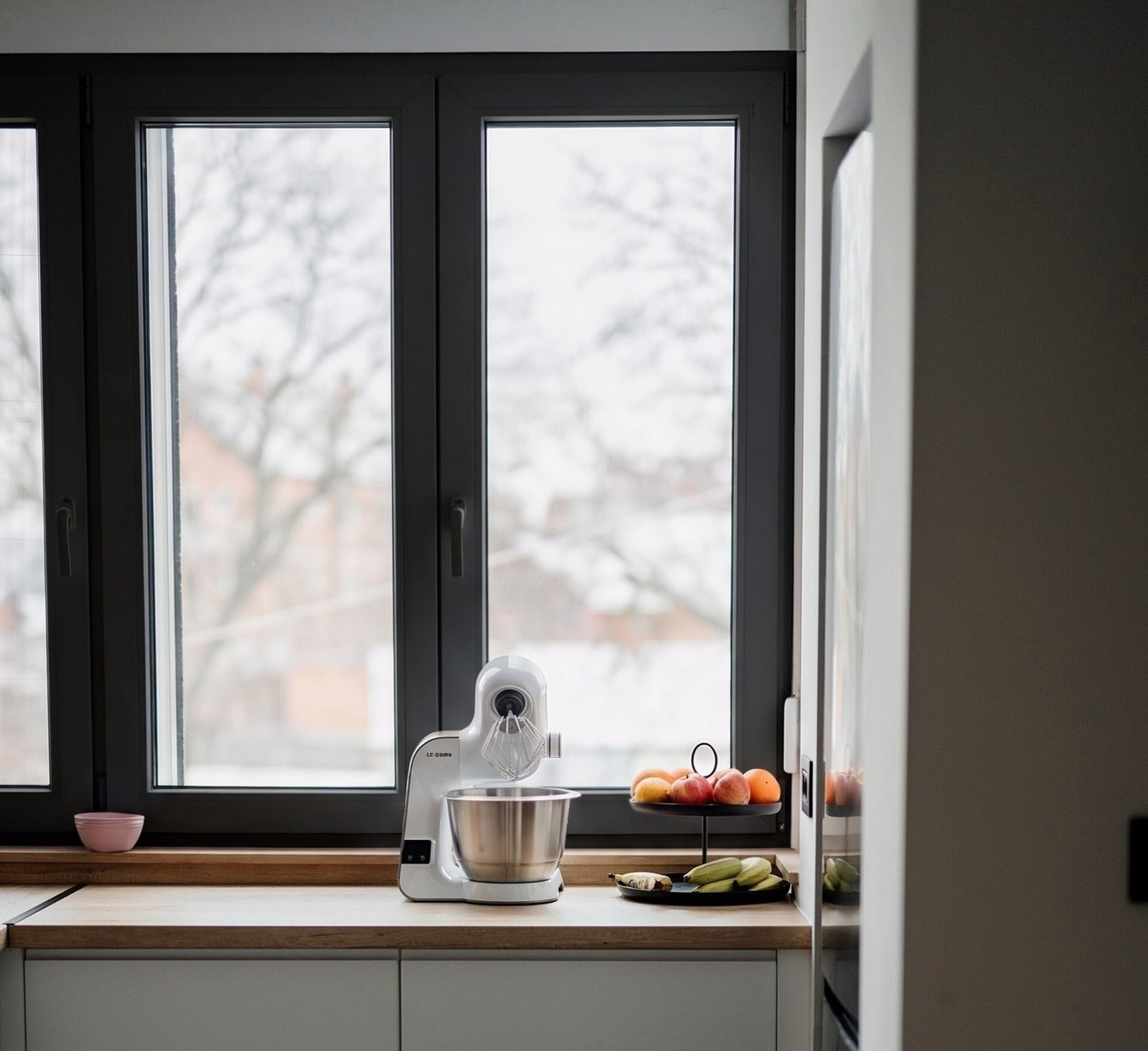
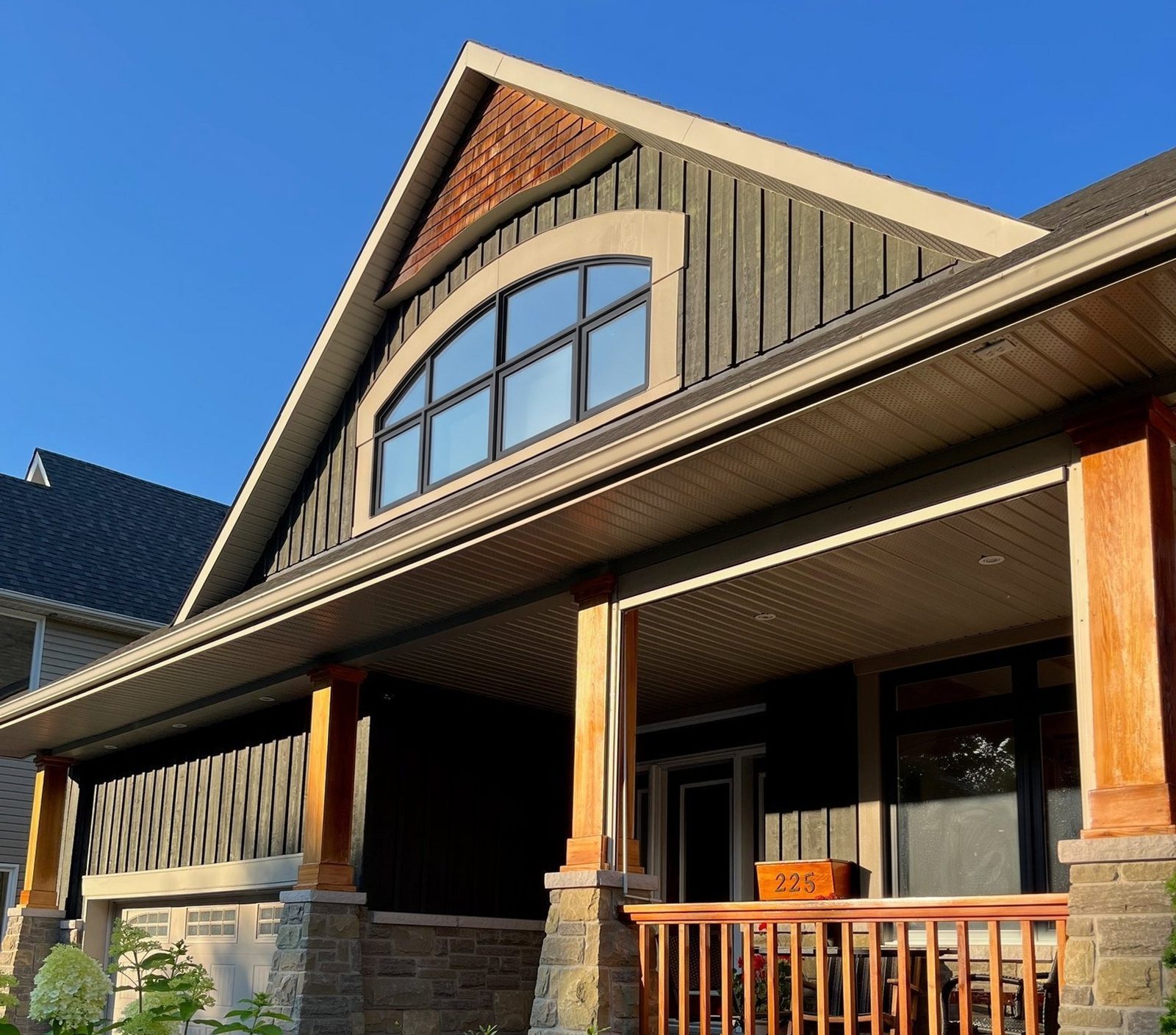
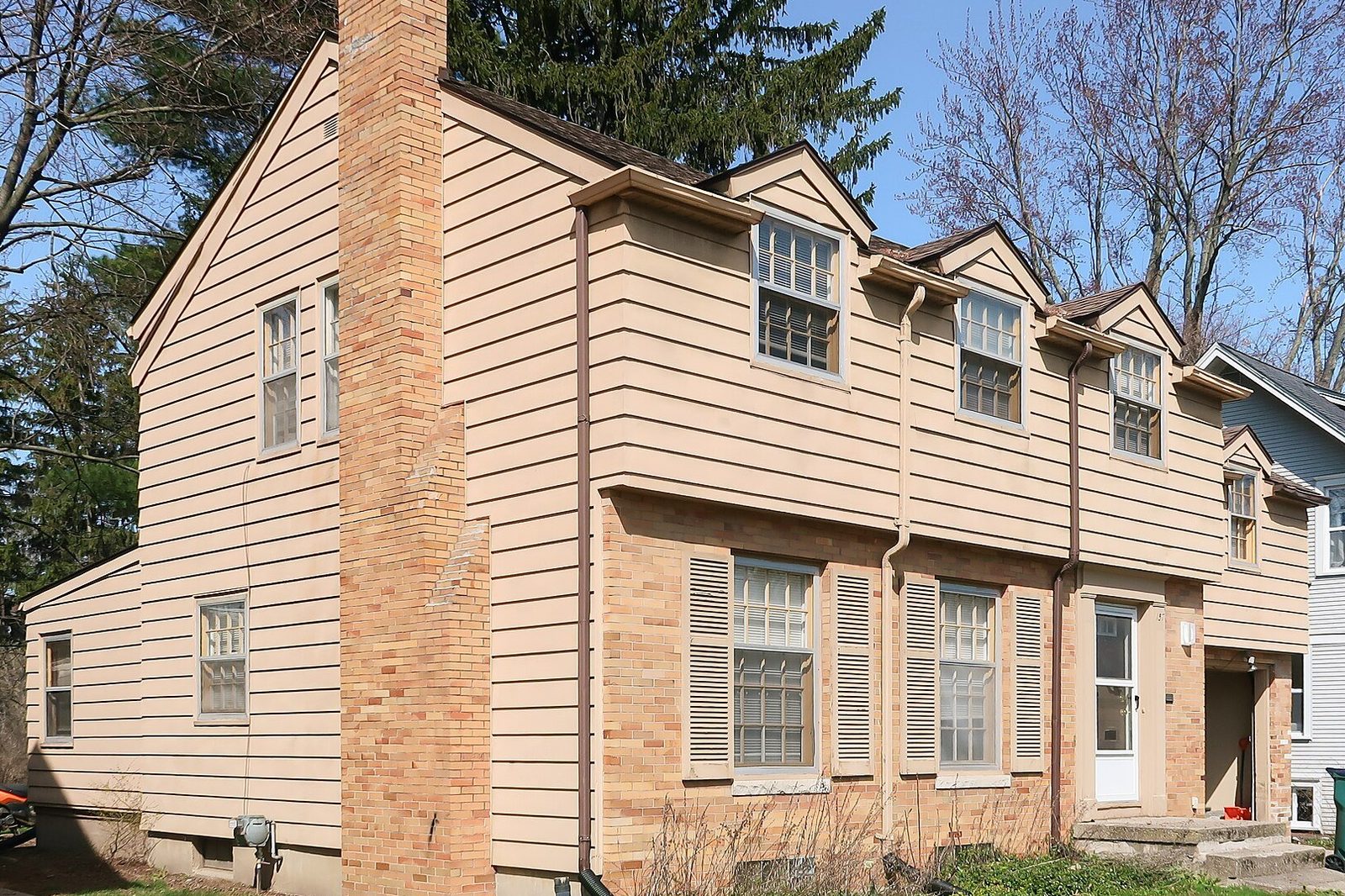
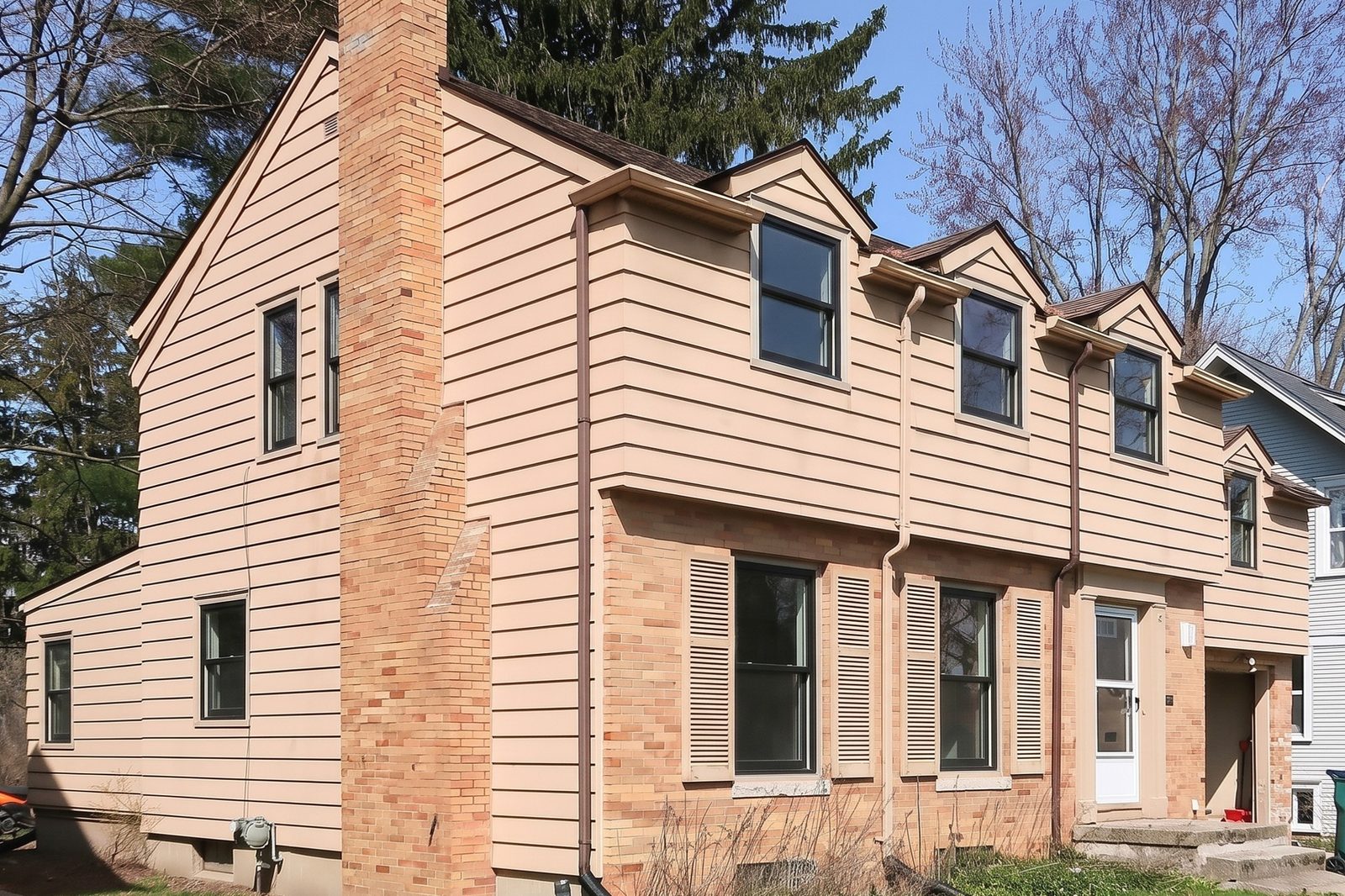
Hi, it's [your name] with [company], from the door earlier. Here's your house with the black frames you asked about, from the photo I took on the sidewalk.
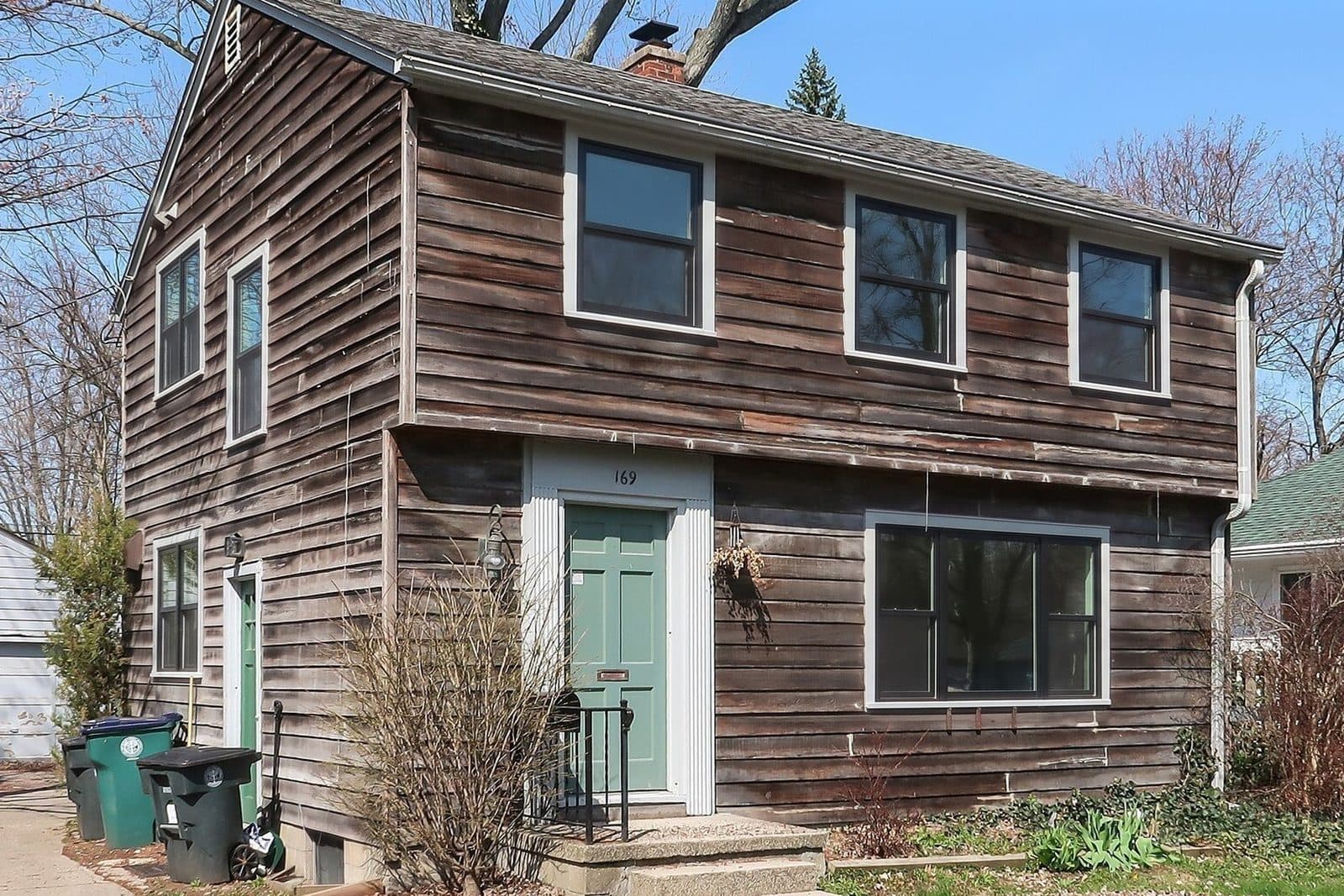 Render
Thanks! We both like the black. What would it cost?
Depends on sizes and options, so I'd want to measure first. Would Tuesday or Wednesday evening work for both of you? It takes about an hour and a half.
What do you say when you sit down at the kitchen table?
Three things in the first two minutes: thank them, say how long you'll be, and lay out what will happen so the price at the end isn't a surprise. The order of the whole visit is in window sales presentation; these are the words.
Then ask before you show anything. JLC says money is usually the homeowner's biggest objection and suggests finding out what the customer plans to spend before presenting5, so the budget question belongs here, early, asked plainly. More questions by topic are in window sales discovery questions.
Opening at the table
"Thanks for having me. I've planned about an hour and a half. Does that still work for you both?"
"Here's the plan: you tell me what's going on, we walk the house and I measure, I show you a couple of looks on your own house, and then we go over prices. You'll have it all in writing before I go."
"What made you call now, instead of last year or next year?"
"If these windows were fixed, what would be different for you?"
"Have you had anyone else out? What did you think?"
"What did you have in mind to spend, even a rough range? It helps me show you options that fit."
What's a good window sales pitch at the table?
Not a speech about your company. The pitch is three short points tied to what they told you: what's wrong with their windows, what you'd put in and how you'd install it, and what it will look like on their house. The first two come from the walk-through and a corner sample. The third is where most reps wave their hands, and where a render of their own house does the work.
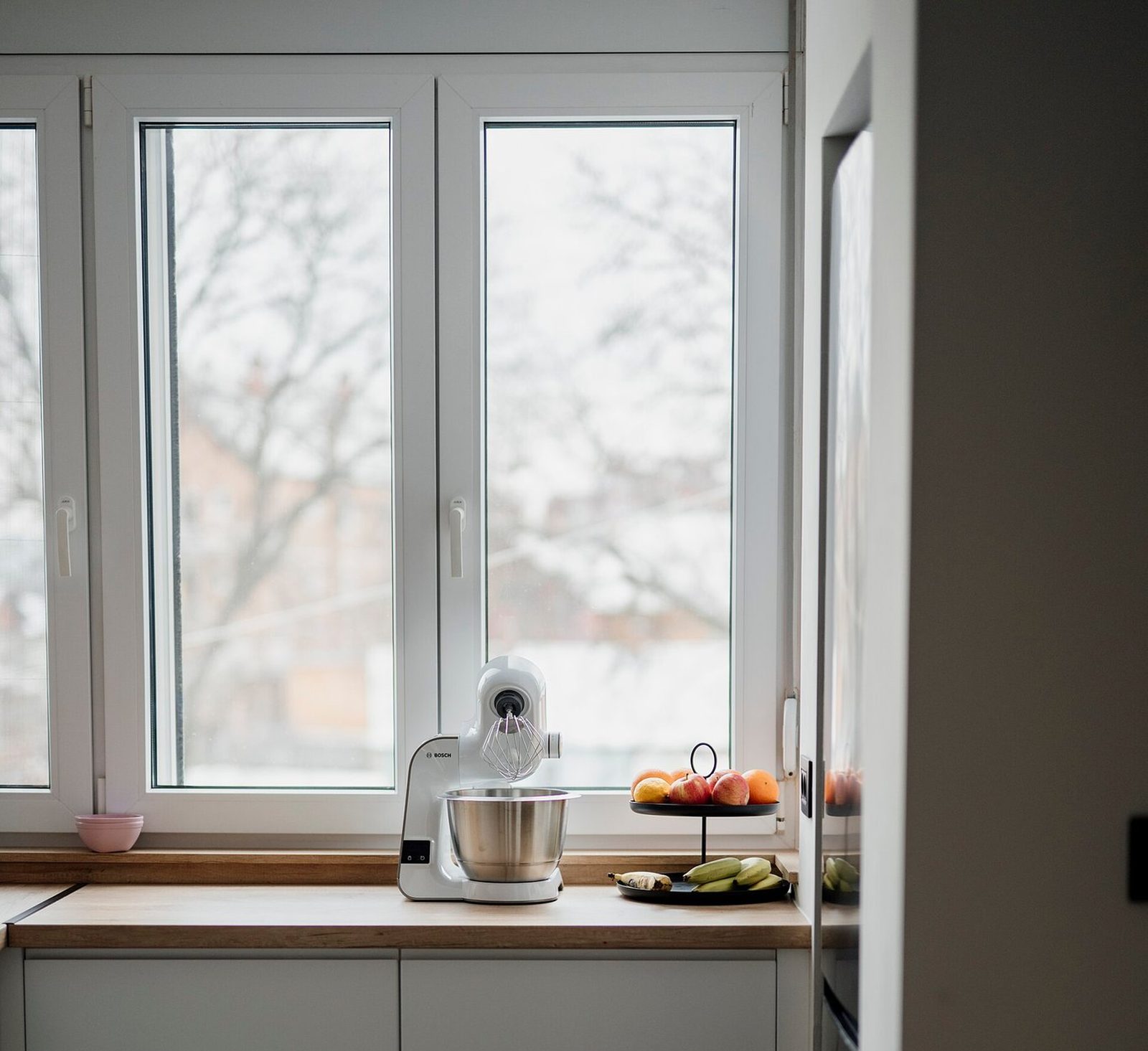
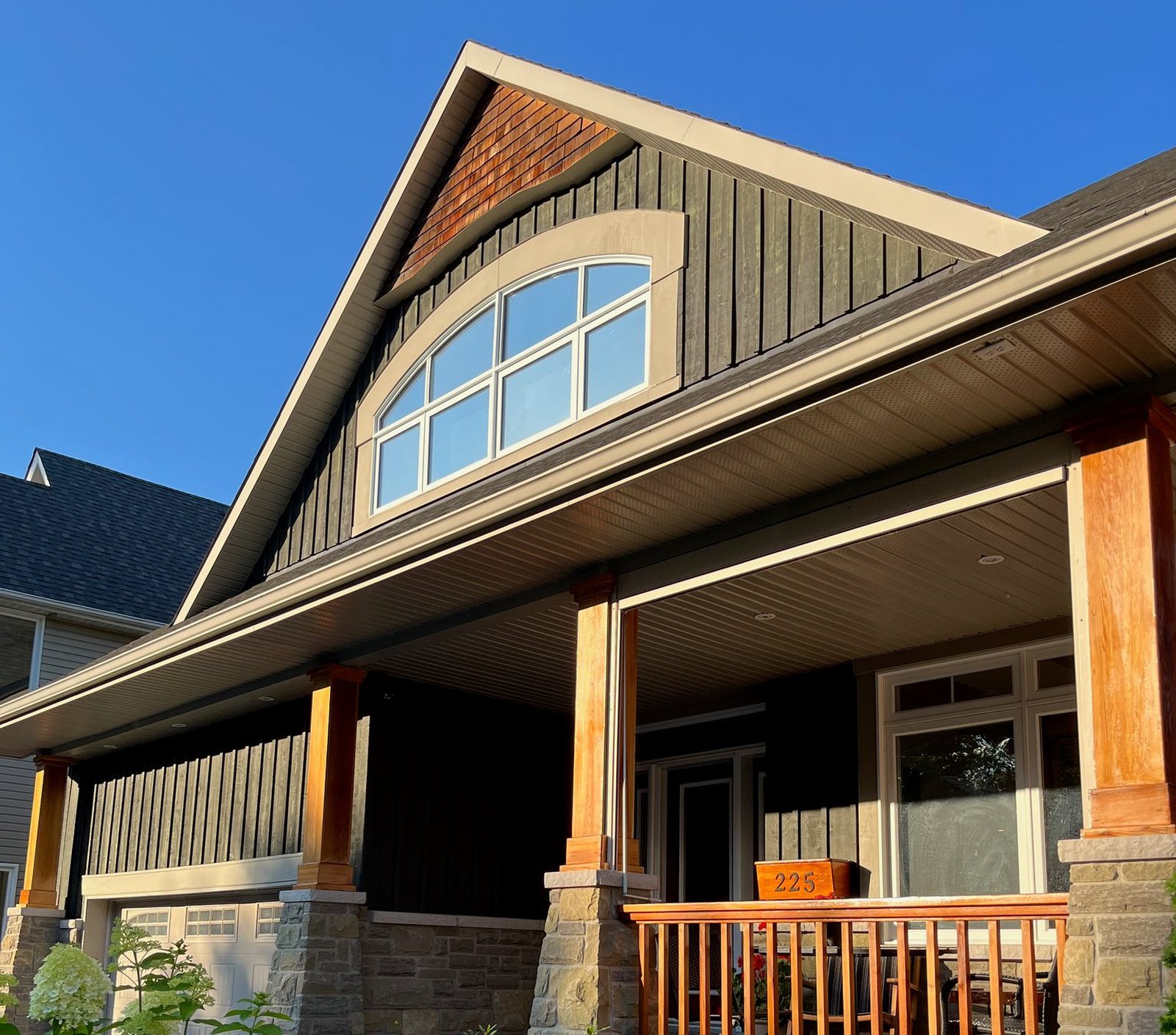
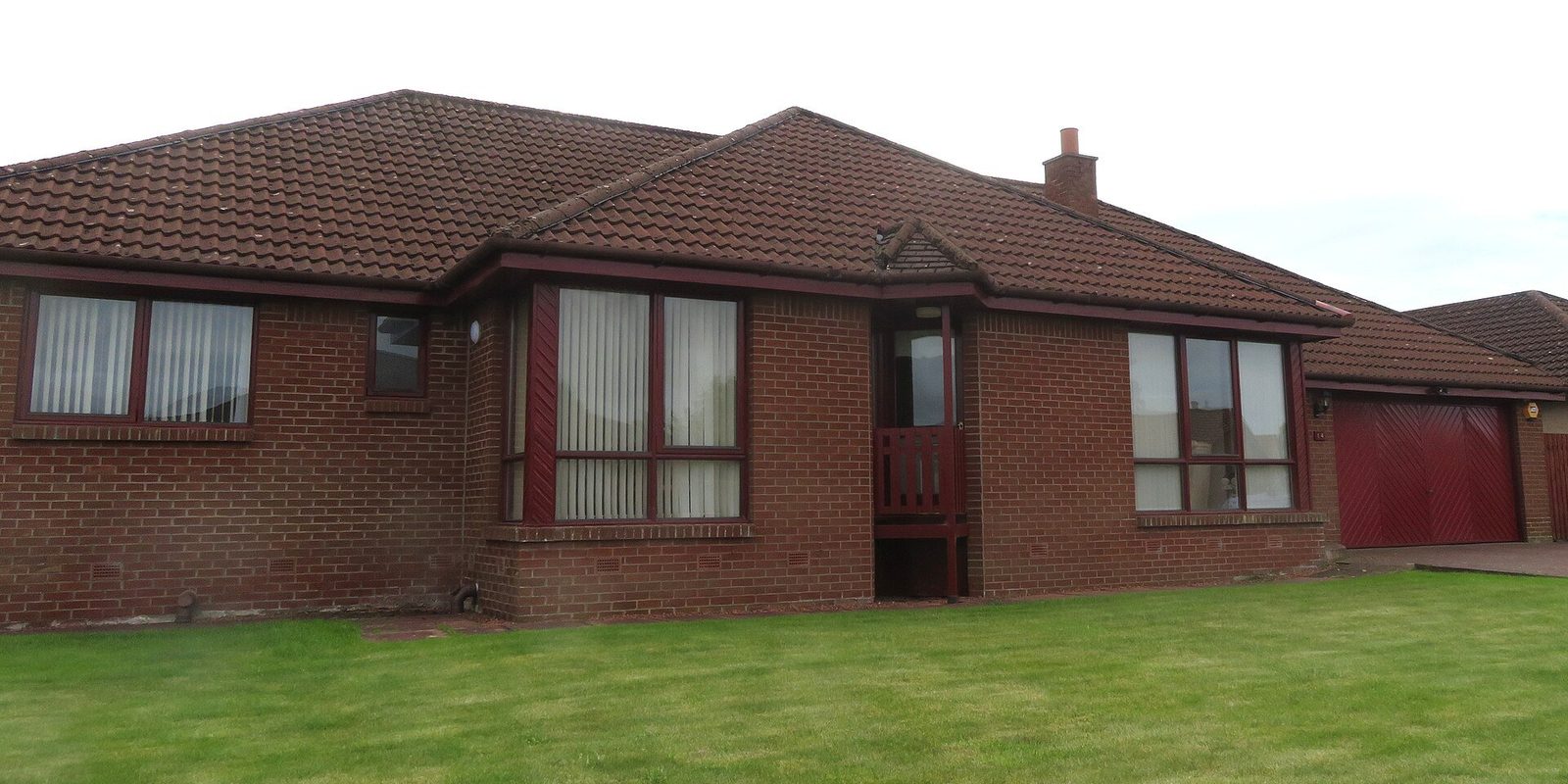
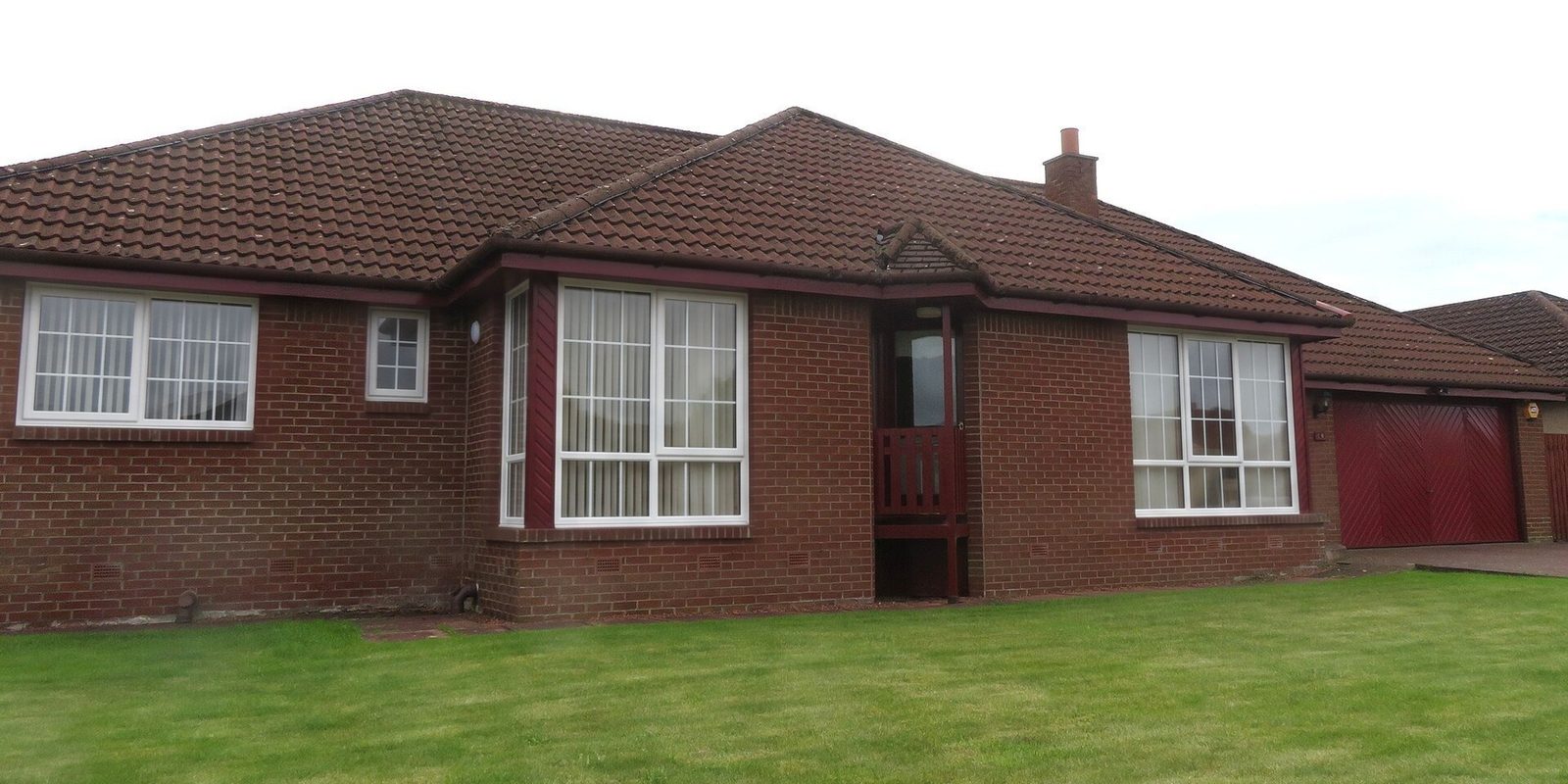
Show two looks from the same photo and let them choose. Grids are a good test: plain windows with white colonial grids added is a change that's hard to picture from a brochure and easy to see on their own house. Call it what it is: a preview of the look, not a photo of a finished job.
The pitch in three parts
The problem: "You showed me three things: the fogged glass in the living room, the bedroom windows that won't stay up, and the draft by the back door. Those are the windows we'd fix."
The product: "Here's a corner of the window I'd put in. Feel the sash. Here's how we'd take the old ones out without tearing up your trim."
The look: "This is the photo I took out front. Here's your house with white grids, and here it is without. Which one looks like your house?"
"These are previews of the look. Screen colors are close but not exact, so we'll confirm with the real sample before anything is ordered."
What do you say when you give the price and ask for the order?
Put the price on paper, one line per option, and walk through what each includes before you say the total. Then ask one clear question and wait. Techniques for the ask, and what to do after the signature, are in how to close window sales; whether to aim for a decision on the first visit at all is in one call close window sales.
If they sign, the post-close starts right away: what they bought, what happens next, and their right to cancel. Under the FTC's rule, a sale of $25 or more made at the buyer's home can be canceled until midnight of the third business day, and the seller has to tell the buyer and give them a cancellation form6. States can add their own rules. If they don't sign, leave with a booked next step and their permission to follow up.
Price, ask and leaving
"Here's the price for each option, in writing. Let me go line by line first: the windows, the install, removal and haul-away, and the warranty."
"So that's the white with grids, and the black without. Which one would you like to go with?" Then wait.
If yes: "Great. Let's do the paperwork together, and I'll go through exactly what happens next, including your right to cancel."
If not tonight: "That's fine. What's the one thing you'd want answered before you decide?"
"Let's pick a time to talk again while we're both here. And I'll send you the picture of your house tonight, so you can look at it again."
How do you keep a sales script from sounding canned?
Learn the lines, then say them in your own words. A script is a checklist of what to cover, not something to read off a card. The lines that sound canned are almost always the ones that try to trap the homeowner or that talk about you instead of their house.
Leave other companies out of it. The FTC tells homeowners to get several written estimates and to ask why prices differ7, so the homeowner expects you to be compared. Help them compare instead of running anyone down.
Script lines that backfire, and what to say instead
Yes-trap questions
- Sounds like
- "Wouldn't you agree your family's comfort is important?"
- Say instead
- "Which room is coldest in January?"
Reading the brochure
- Sounds like
- "Our frames have multi-chamber construction with..."
- Say instead
- "Feel this sash. Now go feel yours."
Price before the look
- Sounds like
- "For the whole house you're looking at about [price]."
- Say instead
- "Let's pick the look first, then I'll show you the price for each option."
Promising energy savings
- Sounds like
- "These will cut your heating bill in half."
- Say instead
- "New windows should stop the drafts we found at the windows. I won't promise a number on your bills; that depends on your house." See window energy savings claims.
Knocking the competition
- Sounds like
- "Those guys put in junk."
- Say instead
- "Ask them for the same list I gave you and compare line by line."
A fake deadline
- Sounds like
- "This price is only good tonight."
- Say instead
- "This price holds until [date], and it's on the paper."
Talking after the ask
- Sounds like
- "...and we also include free..."
- Say instead
- Ask once, then wait for the answer.
| The mistake | Sounds like | Say instead |
|---|---|---|
| Yes-trap questions | "Wouldn't you agree your family's comfort is important?" | "Which room is coldest in January?" |
| Reading the brochure | "Our frames have multi-chamber construction with..." | "Feel this sash. Now go feel yours." |
| Price before the look | "For the whole house you're looking at about [price]." | "Let's pick the look first, then I'll show you the price for each option." |
| Promising energy savings | "These will cut your heating bill in half." | "New windows should stop the drafts we found at the windows. I won't promise a number on your bills; that depends on your house." See window energy savings claims. |
| Knocking the competition | "Those guys put in junk." | "Ask them for the same list I gave you and compare line by line." |
| A fake deadline | "This price is only good tonight." | "This price holds until [date], and it's on the paper." |
| Talking after the ask | "...and we also include free..." | Ask once, then wait for the answer. |
Where the render fits in the script
It shows up in four lines. On the phone, as a promise: "I'll show you a couple of looks on your own house." At the door, with permission: one photo from the sidewalk and their house on your phone. At the table, after the walk-through and before the price: two looks from the same photo, and they pick. And after the visit, as the picture you text them that night.
You can try it on your next appointment: the first render is free with no account, and a free account adds 3 more, no card.