What should a window company's home page show first?
Build for the phone first. Pew Research Center's 2025 survey found that 91% of US adults own a smartphone1, and a homeowner standing next to a drafty window is probably holding one. Open your home page on your own phone and don't scroll: everything a homeowner needs to reach you should be on that first screen.
The first screen on a phone
Headline
- What it says
- What you do and where: "Replacement windows in [county], installed by our own crews."
- Common mistake
- A slogan that could belong to any company in any trade.
Phone number
- What it says
- Tap to call, in the header of every page.
- Common mistake
- A number tucked into the footer, or shown as an image a phone can't dial.
Estimate button
- What it says
- "Book a free estimate," opening a short form.
- Common mistake
- A form with a dozen fields, or one that only works on a computer.
Service area
- What it says
- The towns and counties you actually serve.
- Common mistake
- "Serving the tri-state area" with no towns named.
Proof
- What it says
- Your license number, the window lines you're a dealer for, and where to read your reviews.
- Common mistake
- Logos of brands you don't sell, or badges you didn't earn.
One real photo
- What it says
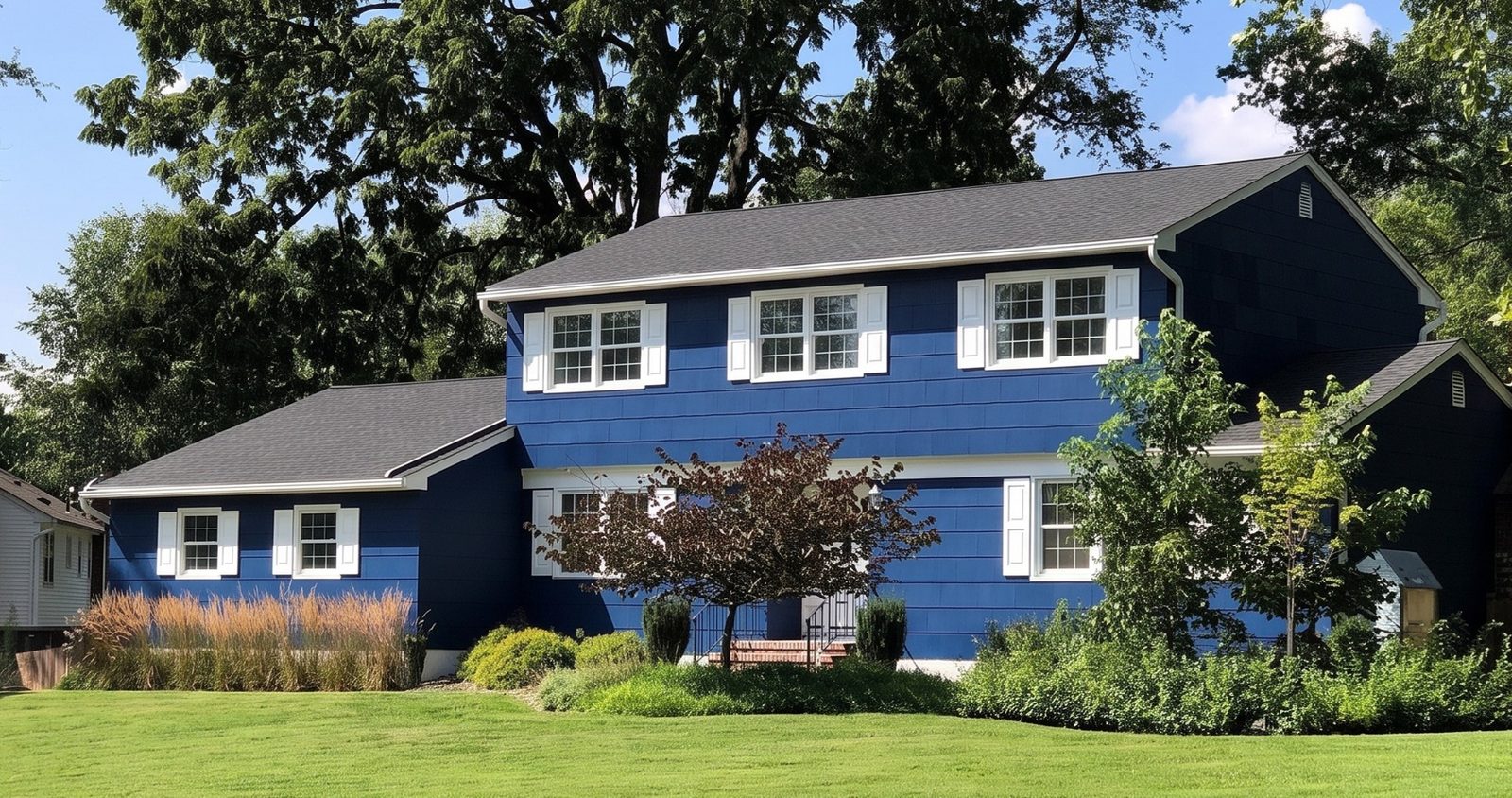
- A house you did, from the street, in daylight.
- Common mistake
- Stock photos of houses that aren't yours.
| Element | What it says | Common mistake |
|---|---|---|
| Headline | What you do and where: "Replacement windows in [county], installed by our own crews." | A slogan that could belong to any company in any trade. |
| Phone number | Tap to call, in the header of every page. | A number tucked into the footer, or shown as an image a phone can't dial. |
| Estimate button | "Book a free estimate," opening a short form. | A form with a dozen fields, or one that only works on a computer. |
| Service area | The towns and counties you actually serve. | "Serving the tri-state area" with no towns named. |
| Proof | Your license number, the window lines you're a dealer for, and where to read your reviews. | Logos of brands you don't sell, or badges you didn't earn. |
| One real photo | A house you did, from the street, in daylight. | Stock photos of houses that aren't yours. |
Which pages does a window company website need?
Fewer pages that each answer a real question beat a big site of thin ones. This set covers what homeowners want to know before they let you in the door.
How to write each page so search engines and chatbots pick it up is in SEO for window companies and getting your window company named by ChatGPT.
Pages worth having, and what goes on each
Replacement windows
- What goes on it
- The frame materials and product lines you sell, with a short, honest note on what each is good for.
Colors and grilles
- What goes on it
- The frame colors and grille patterns you can order, inside and out, with real photos and labelled renders.
Gallery
- What goes on it
- Your installs only: the town, what was replaced, the frame and color, and pictures from the same spot before and after. Renders belong on the colors page, never here.
How it works
- What goes on it
- What happens at the estimate visit, how long it takes and who should be home, then measure, order and install day. Pella, for one, describes a 90-minute in-home appointment2.
Cost
- What goes on it
- Price ranges from your own recent jobs, dated, and what moves the price.
Financing
- What goes on it
- Who the lender is and where the full terms are. More in window replacement financing.
Reviews
- What goes on it
- Genuine reviews, each linked to the site where it was posted.
About
- What goes on it
- The owner, the crews, the license, the years in business and the address.
Service areas
- What goes on it
- A page per area only where you have real jobs and something specific to say.
Contact
- What goes on it
- The form, the phone number, office hours, and what happens after someone sends the form.
| Page | What goes on it |
|---|---|
| Replacement windows | The frame materials and product lines you sell, with a short, honest note on what each is good for. |
| Colors and grilles | The frame colors and grille patterns you can order, inside and out, with real photos and labelled renders. |
| Gallery | Your installs only: the town, what was replaced, the frame and color, and pictures from the same spot before and after. Renders belong on the colors page, never here. |
| How it works | What happens at the estimate visit, how long it takes and who should be home, then measure, order and install day. Pella, for one, describes a 90-minute in-home appointment2. |
| Cost | Price ranges from your own recent jobs, dated, and what moves the price. |
| Financing | Who the lender is and where the full terms are. More in window replacement financing. |
| Reviews | Genuine reviews, each linked to the site where it was posted. |
| About | The owner, the crews, the license, the years in business and the address. |
| Service areas | A page per area only where you have real jobs and something specific to say. |
| Contact | The form, the phone number, office hours, and what happens after someone sends the form. |
How should the estimate form work?
Keep it short and reply fast. Ask for what you need to call back and qualify the job, and nothing more:
- Name and mobile number.
- Town or zip code, so you know the house is in your area.
- Roughly how many windows, and what's wrong with them: drafts, fogged glass, rot, or just the look.
- An optional photo of the front of the house.
- The best time to reach them.
Hi, this is [name] from [company]. Thanks for the estimate request. I'll call you within the hour from this number.
Thanks. I attached a picture of the front. We're thinking about black frames.
Got it. Here's your house with black frames, from your photo, same windows. When I come out we can look at white too and go over prices.
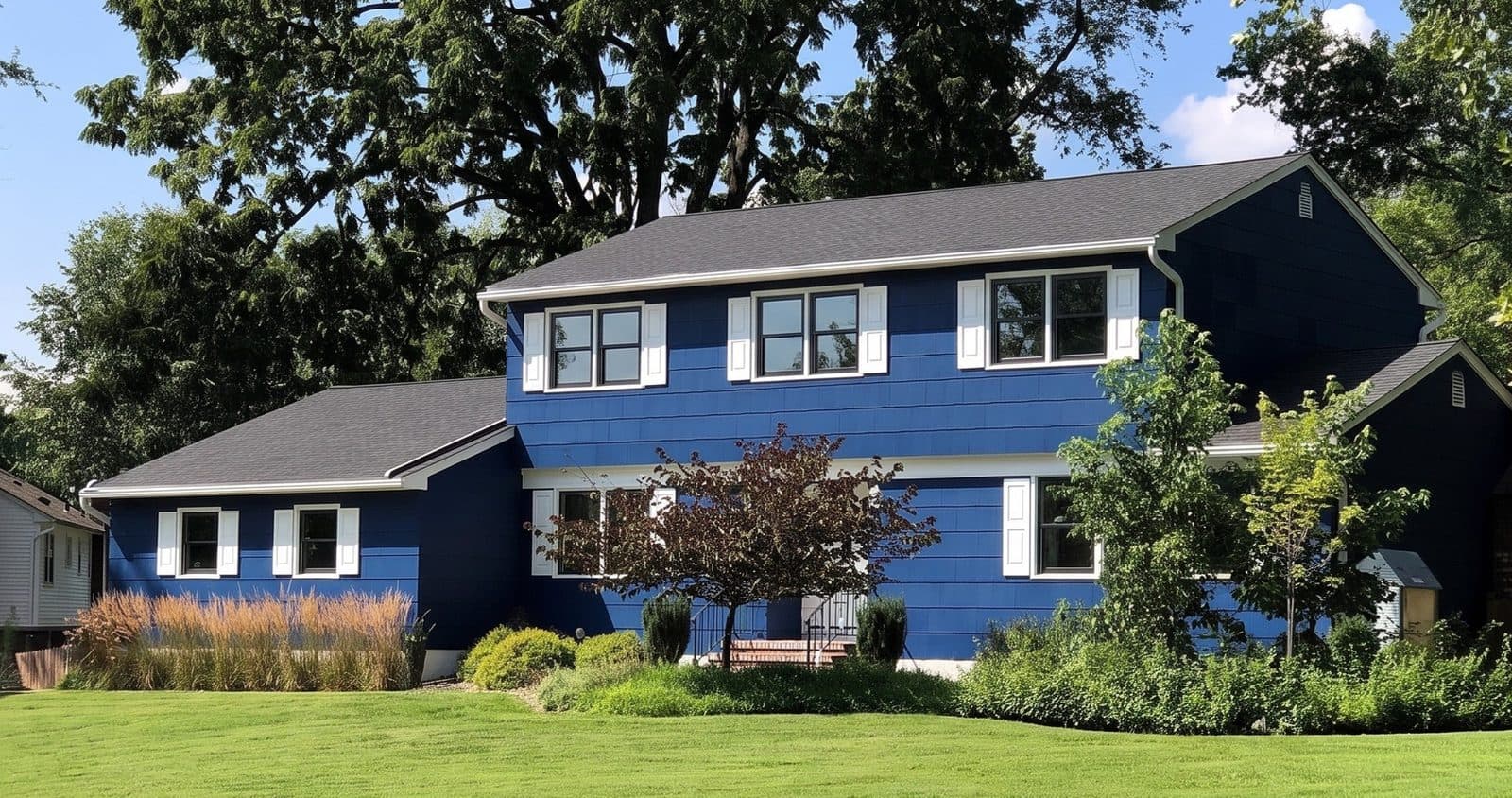 Render
How fast should someone answer the website form?
Within the hour, and most companies don't. When the authors of a 2011 Harvard Business Review study sent a test web lead to 2,241 US companies across industries, 37% replied within an hour and 23% never replied at all3. The thank-you page should say what happens next and when, and someone should call before that hour is up. The full routine is in speed to lead for window companies.
If you plan to text leads from software, the consent line on the form matters. FCC rules require written consent for autodialed marketing texts4. This is general information, not legal advice; check your state's rules and your lawyer.
Thank-you page wording, ready to fill in
Thanks, we have your request. [Name] from our office will call you from [number] within the hour. Office hours are [hours]; if you sent this after hours, expect the call by [time] the next morning.
Want to save time on the call? Have a rough count of your windows ready and note any that stick, fog up or let in drafts.
If you didn't attach a photo of the front of your house, you can text one to [number]. We'll use it to show you new frames on your own house.
Only promise a reply time your office actually keeps, including evenings and weekends.
What photos belong on a window company website?
Your own work, every time. Homeowners can spot stock photos, and a gallery of houses in their own town is what makes you the local company.
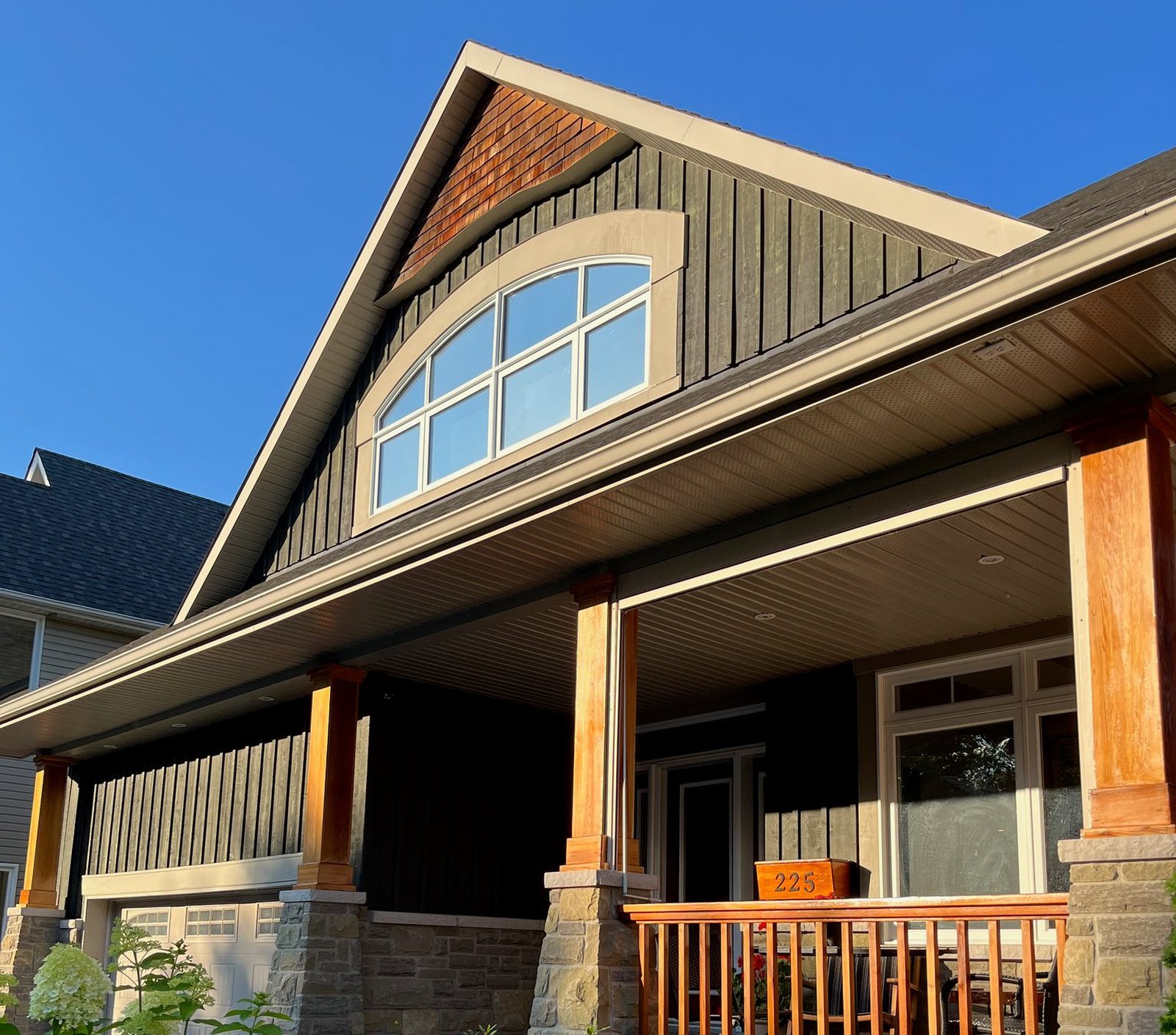
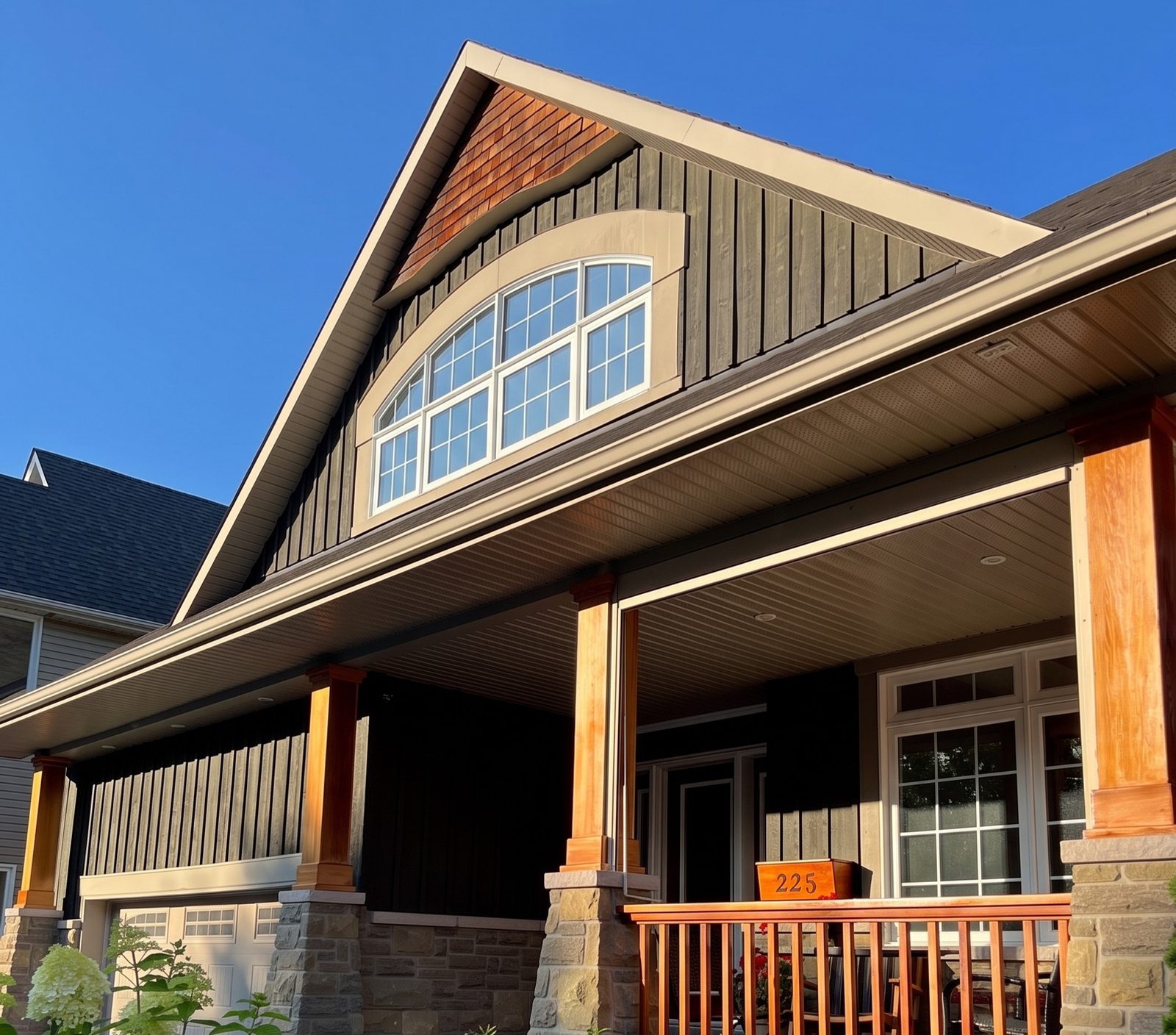
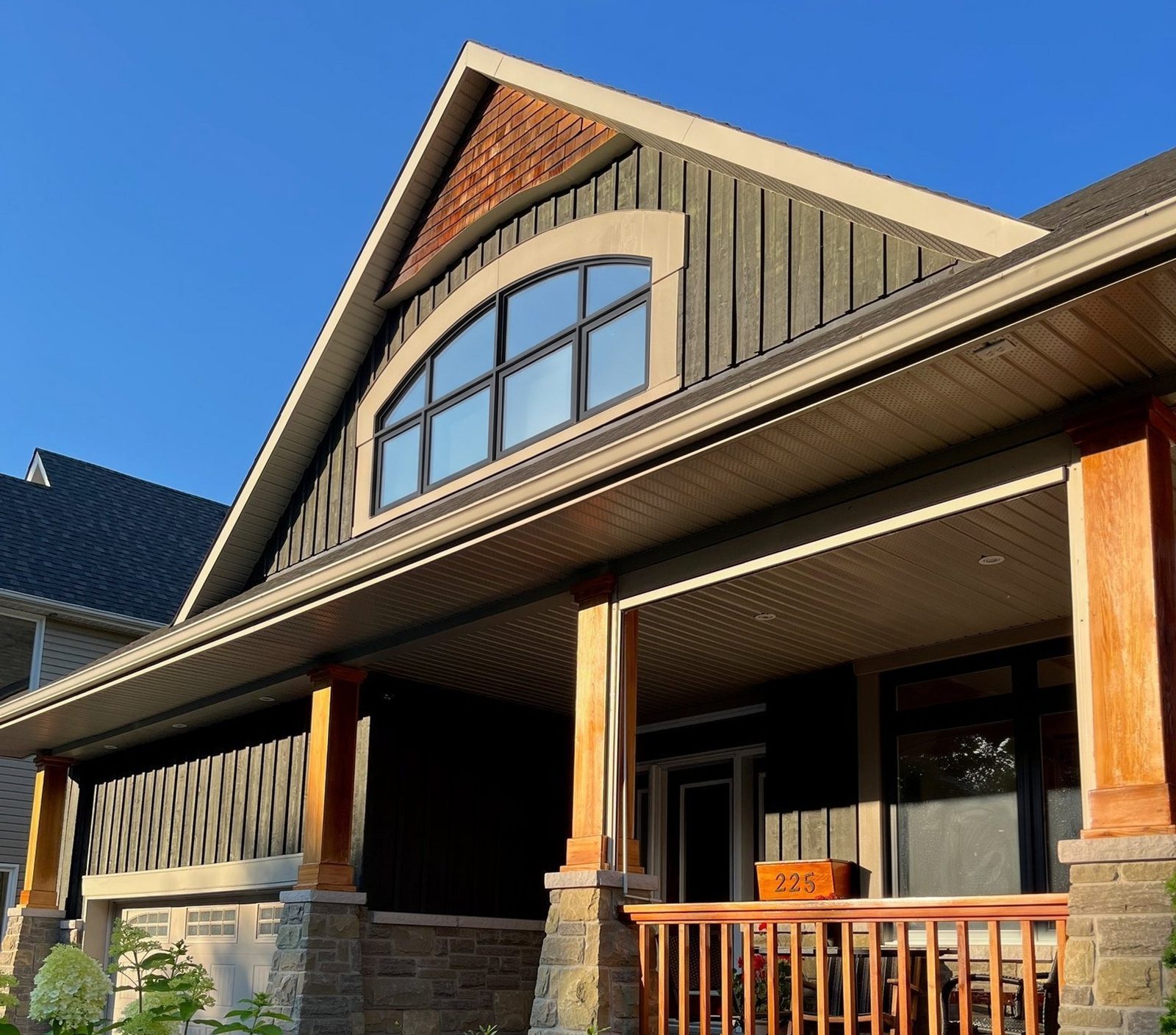
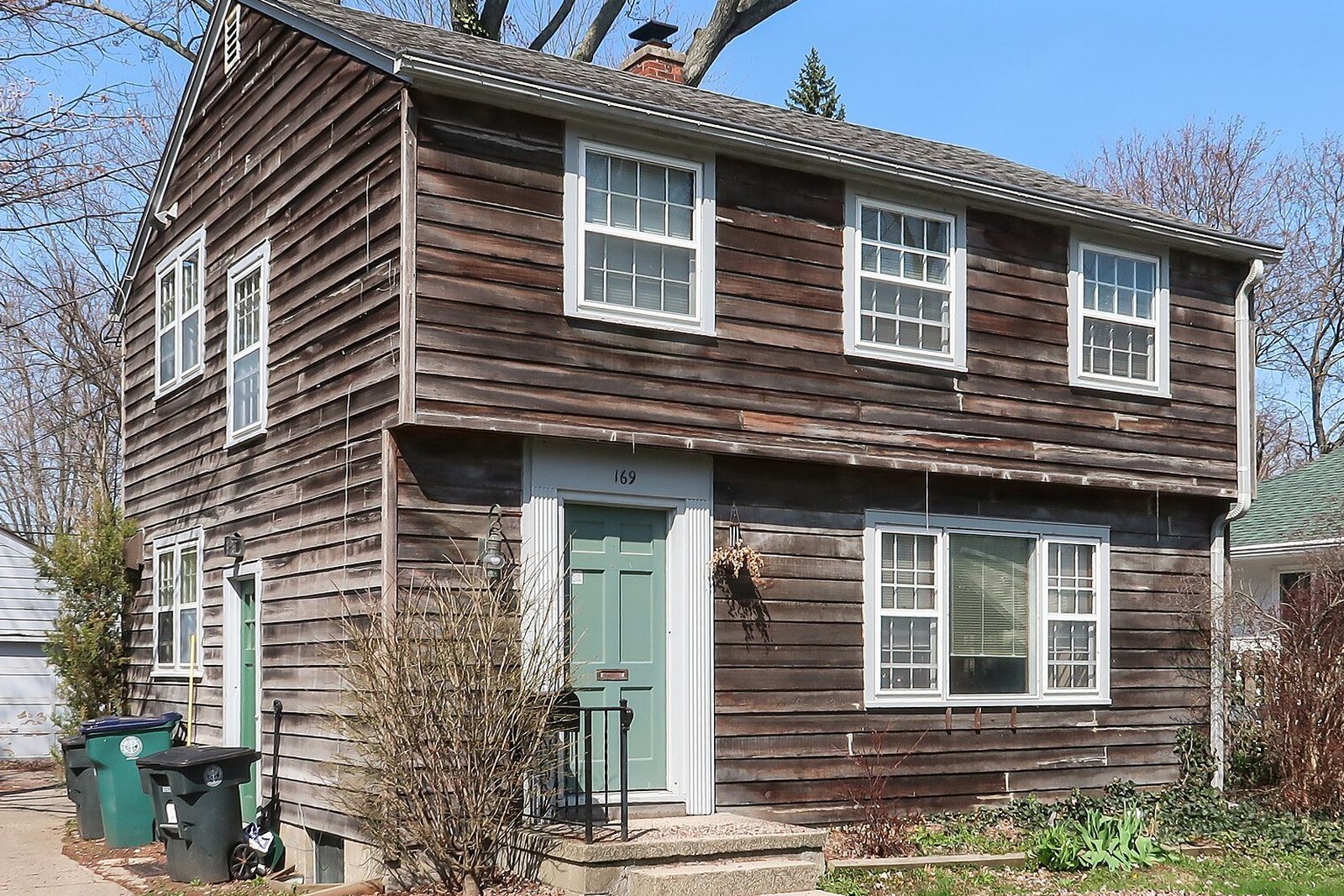
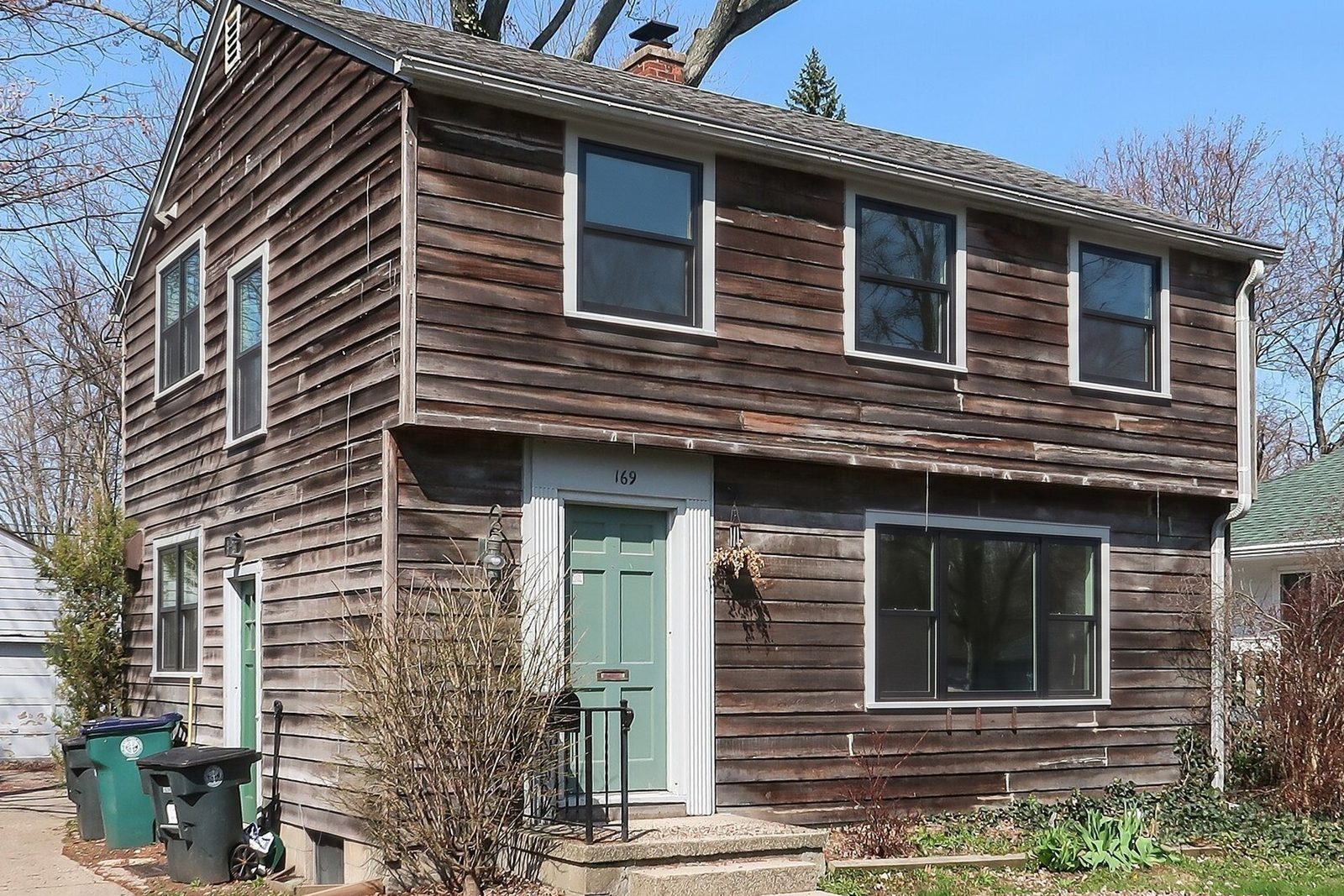
If you show renders, label them, and not just to be polite. The FTC says claims in advertisements must be truthful, can't be deceptive and must be evidence-based5, and a render passed off as an install is a claim about work you haven't done. Below the list is a labelled pair: a public photo of a 1947 colonial, then a render of the same house with black frames and no grids.
- Pictures from the same spot before and after each install, in daylight, with the homeowner's permission and no house number showing.
- Close-ups of what they're paying for: the frame corner, the trim, the caulk line, the cleanup.
- Your crews at work, in your shirts and trucks.
- Renders, when you use them, on your colors and grilles pages, labelled as renders on the image or in the caption. A render shows what a house could look like; it isn't a finished job, so keep it out of the gallery of your installs.
What website claims get window companies in trouble?
A short list, and regulators have looked at window sellers' marketing before. This is general information, not legal advice. Check your state's rules and ask your lawyer before you publish.
Claims to check before they go live
"Cut your energy bills by a third"
- What regulators have said
- In 2012 FTC staff warned window makers that savings claims, such as cutting heating and cooling costs by more than 30%, must be backed by competent and reliable scientific evidence6.
- Safer version
- Explain what the energy label measures and show the rating of the line you sell. See window energy savings claims.
A savings calculator
- What regulators have said
- One FTC staff letter flagged a window company's online calculator that returned 35% savings whatever the user typed in7.
- Safer version
- Leave it off unless the math is real and documented.
"Regularly this much, now that much"
- What regulators have said
- The FTC's pricing guides say a former price must be one you actually offered to the public, regularly, for a reasonably substantial period8.
- Safer version
- Show the price you charge, and run real promotions with real end dates.
Reviews on your site
- What regulators have said
- The FTC's 2024 rule bans fake reviews, reviews bought on condition they're positive, and undisclosed reviews by insiders9.
- Safer version
- Link to genuine reviews where they were posted, good and bad, and show only badges and certifications you actually hold.
Your license
- What regulators have said
- California requires a contractor's license number in all forms of advertising10; other states set their own rules.
- Safer version
- Put your license number in the footer of every page, whatever your state.
Renders shown as installs
- What regulators have said
- Ad claims must be truthful and evidence-based5.
- Safer version
- Label every render as a render.
| Claim | What regulators have said | Safer version |
|---|---|---|
| "Cut your energy bills by a third" | In 2012 FTC staff warned window makers that savings claims, such as cutting heating and cooling costs by more than 30%, must be backed by competent and reliable scientific evidence6. | Explain what the energy label measures and show the rating of the line you sell. See window energy savings claims. |
| A savings calculator | One FTC staff letter flagged a window company's online calculator that returned 35% savings whatever the user typed in7. | Leave it off unless the math is real and documented. |
| "Regularly this much, now that much" | The FTC's pricing guides say a former price must be one you actually offered to the public, regularly, for a reasonably substantial period8. | Show the price you charge, and run real promotions with real end dates. |
| Reviews on your site | The FTC's 2024 rule bans fake reviews, reviews bought on condition they're positive, and undisclosed reviews by insiders9. | Link to genuine reviews where they were posted, good and bad, and show only badges and certifications you actually hold. |
| Your license | California requires a contractor's license number in all forms of advertising10; other states set their own rules. | Put your license number in the footer of every page, whatever your state. |
| Renders shown as installs | Ad claims must be truthful and evidence-based5. | Label every render as a render. |
How do you know if your window company website is working?
Count what turns into money, not visits. A website works when it books estimate visits at a cost you can live with.
For paid traffic, a yardstick helps: LocaliQ's 2025 search-ad benchmarks put the conversion rate for Doors & Windows Sales at 4.41%, one of the lower rates among home services11. If your ad landing pages convert well below that, fix the page before you raise the budget.
What to track each month
Calls and forms
- How to get it
- Call tracking on the site's number, plus a log of every form
- What it tells you
- Whether the site produces leads at all
Leads by page
- How to get it
- The page the visitor was on when they called or sent the form
- What it tells you
- Which pages earn their place
Time to first reply
- How to get it
- Form time against the first call or text
- What it tells you
- Whether leads go cold in your office
Appointments set and sat
- How to get it
- Your CRM or a spreadsheet, with the source on every lead
- What it tells you
- Whether website leads are real buyers
Cost per set appointment
- How to get it
- Site, hosting, agency and ad spend, divided by appointments set from the site
- What it tells you
- What a website appointment really costs you
| Number | How to get it | What it tells you |
|---|---|---|
| Calls and forms | Call tracking on the site's number, plus a log of every form | Whether the site produces leads at all |
| Leads by page | The page the visitor was on when they called or sent the form | Which pages earn their place |
| Time to first reply | Form time against the first call or text | Whether leads go cold in your office |
| Appointments set and sat | Your CRM or a spreadsheet, with the source on every lead | Whether website leads are real buyers |
| Cost per set appointment | Site, hosting, agency and ad spend, divided by appointments set from the site | What a website appointment really costs you |
Should a window company website have a visualizer?
Some companies sell one. Hover's Design Embed puts a Hover design tool on a contractor's own website to collect homeowner leads12. Hover says it brings more requested appointments and bigger tickets, though its page gives no sample size or method12. Renoworks announced LeadPOD in 2025 to capture and qualify homeowners' design activity13.
WindowRender doesn't offer a website version yet. Until you add one, the photo field on your estimate form does the same job by hand: the homeowner sends a picture, you send back their house with new windows, and the first call starts with something they want to see.
Where the render fits on your website
In the reply to the form. A homeowner who attaches a photo of their house has told you what they want to see. Render the frames they mentioned in 30 seconds, text it with your callback, and the estimate visit starts with a look they already like.
On your colors and grilles page, labelled as renders. A local house shown in black and in white is the choice your visitors are weighing, and the caption keeps it honest. The gallery stays for finished jobs.
At the visit, open with the render they already have, then render their second choice from your own photo while you're at the table.