Do Facebook ads work for window companies?
They can, but they do a different job from search ads. Someone typing "window replacement near me" into Google already wants windows. Someone scrolling Facebook or Instagram wasn't thinking about windows until your ad stopped them. Facebook leads are earlier in the decision, so more of them will go nowhere, and your follow-up has to be built for that.
What Facebook does well is put a picture in front of homeowners in the towns you choose. Windows are a visual purchase: a house with tired frames next to the same house with new black ones does more selling than any headline. That's why the image matters more here than on Google, and why a stock photo of a house you've never touched loses.
Before you spend, know what a lead and a sale cost you on the channels you already use. For a yardstick, LocaliQ's 2025 benchmarks put search-ad leads for doors and windows at $200.34 each1. We haven't found a Facebook cost per lead for window companies from a source we'd stand behind, so measure your own and compare it with what your other channels cost per sale.
Facebook ads and Google search ads for a window company
Who sees it
- Facebook and Instagram ads
- Homeowners in the area you set, while they scroll
- Google search ads
- People searching for windows right now
How warm the lead is
- Facebook and Instagram ads
- Cooler: they reacted to a picture and an offer
- Google search ads
- Warmer: they were already looking
What does the selling
- Facebook and Instagram ads
- The image and the offer
- Google search ads
- The search term, the ad text and your landing page
Biggest risk
- Facebook and Instagram ads
- Leads who forget they filled in a form, and offers that attract the wrong people
- Google search ads
- Paying for clicks from people outside your area or after repairs you don't do
More on it
- Facebook and Instagram ads
- This page
- Google search ads
- Google Ads for window companies
| Facebook and Instagram ads | Google search ads | |
|---|---|---|
| Who sees it | Homeowners in the area you set, while they scroll | People searching for windows right now |
| How warm the lead is | Cooler: they reacted to a picture and an offer | Warmer: they were already looking |
| What does the selling | The image and the offer | The search term, the ad text and your landing page |
| Biggest risk | Leads who forget they filled in a form, and offers that attract the wrong people | Paying for clicks from people outside your area or after repairs you don't do |
| More on it | This page | Google Ads for window companies |
What should a window company offer in a Facebook ad?
One clear, true offer that a homeowner can act on today. The offer turns a nice picture into a form fill, and it's also where most window ads get into trouble. Here's how the common ones hold up.
Window ad offers: what works and what backfires
See your house with new windows before you buy
- How it holds up
- It answers the question every homeowner has (what will it look like?) and gives them a reason to send a photo
- If you use it
- Say it's a design preview made from their own photo, and show it at the free estimate or by text
A free in-home estimate
- How it holds up
- True and expected, but every competitor says it too
- If you use it
- Add something specific: written prices for each option, a measure date this week
A real install date this season
- How it holds up
- A reason to act now that is actually true
- If you use it
- Name the month, keep the promise, and take the ad down when the slots are gone
Low monthly payments
- How it holds up
- Lowers the first hurdle on a big purchase
- If you use it
- Financing ads carry their own disclosure rules, and Meta requires US ads for financial products and services to run in a special ad category with fewer targeting options2. Ask Meta whether your payment offer puts the ad there, check the wording with your lender and your lawyer, and see window replacement financing
Buy one, get one, or a big discount
- How it holds up
- Honest only if the starting price is one you really charge
- If you use it
- The FTC's pricing guides say a former price is a fair basis for a comparison only if it's the actual price the item was regularly offered at for a reasonably substantial time3
Cut your energy bill in half
- How it holds up
- Almost impossible to prove for any one house
- If you use it
- In 2012 five window sellers settled FTC charges over deceptive energy savings claims, in some cases that new windows would cut energy bills in half4; see window energy savings claims
Free windows, or a government program
- How it holds up
- Brings in people expecting something you don't sell
- If you use it
- Don't. The grant ads section below explains why
| Offer | How it holds up | If you use it |
|---|---|---|
| See your house with new windows before you buy | It answers the question every homeowner has (what will it look like?) and gives them a reason to send a photo | Say it's a design preview made from their own photo, and show it at the free estimate or by text |
| A free in-home estimate | True and expected, but every competitor says it too | Add something specific: written prices for each option, a measure date this week |
| A real install date this season | A reason to act now that is actually true | Name the month, keep the promise, and take the ad down when the slots are gone |
| Low monthly payments | Lowers the first hurdle on a big purchase | Financing ads carry their own disclosure rules, and Meta requires US ads for financial products and services to run in a special ad category with fewer targeting options2. Ask Meta whether your payment offer puts the ad there, check the wording with your lender and your lawyer, and see window replacement financing |
| Buy one, get one, or a big discount | Honest only if the starting price is one you really charge | The FTC's pricing guides say a former price is a fair basis for a comparison only if it's the actual price the item was regularly offered at for a reasonably substantial time3 |
| Cut your energy bill in half | Almost impossible to prove for any one house | In 2012 five window sellers settled FTC charges over deceptive energy savings claims, in some cases that new windows would cut energy bills in half4; see window energy savings claims |
| Free windows, or a government program | Brings in people expecting something you don't sell | Don't. The grant ads section below explains why |
What makes a good image for a window ad?
Real pictures of your own finished jobs come first. A before and after of a house in the same town, shot from the same spot, used with the homeowner's written permission, is the most believable ad you can run. Make it a habit on every job: the front from the street before the crew starts, and the same angle when they pack up.
When you don't have that job yet, a render can show the change you sell: the same house with a new frame color or grilles. That's fair as long as nobody could mistake it for work you did. Put "Render" or "Design preview" on the image itself, not only in the text people skip, and never call it a finished job, a recent install or "our work." The FTC says claims in ads must be truthful, not deceptive or unfair, and backed by evidence5. A render passed off as an install fails that test.
- One house, one change: frame color or grilles, not everything at once.
- The whole front in the frame, in daylight, from the street.
- "Render" or "Design preview" written on the image, big enough to read on a phone.
- Your company name and the towns you serve in the text, so the right people respond.
- No stock photos, and never another company's jobs.
What do sample window ads made from renders look like?
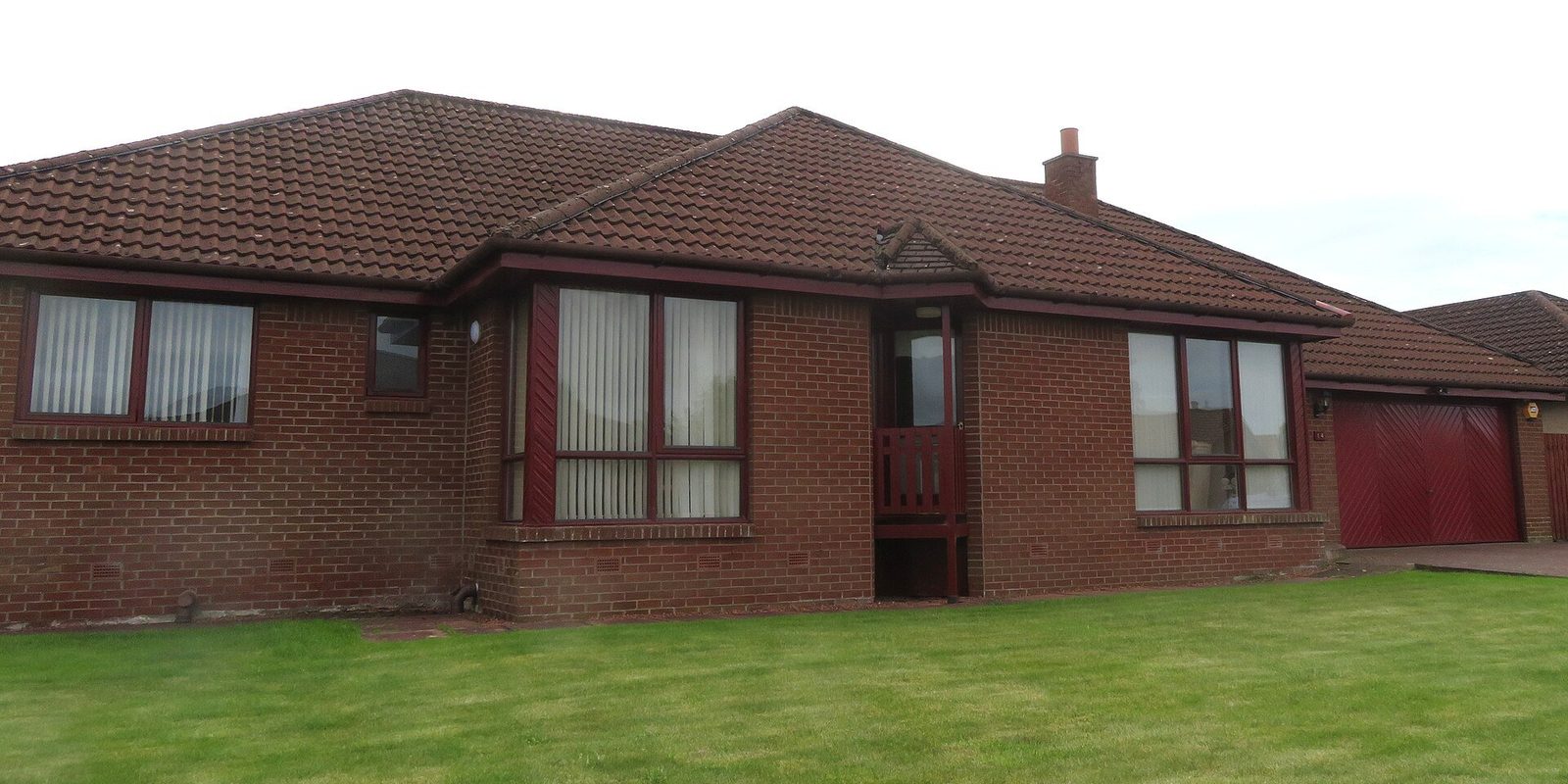
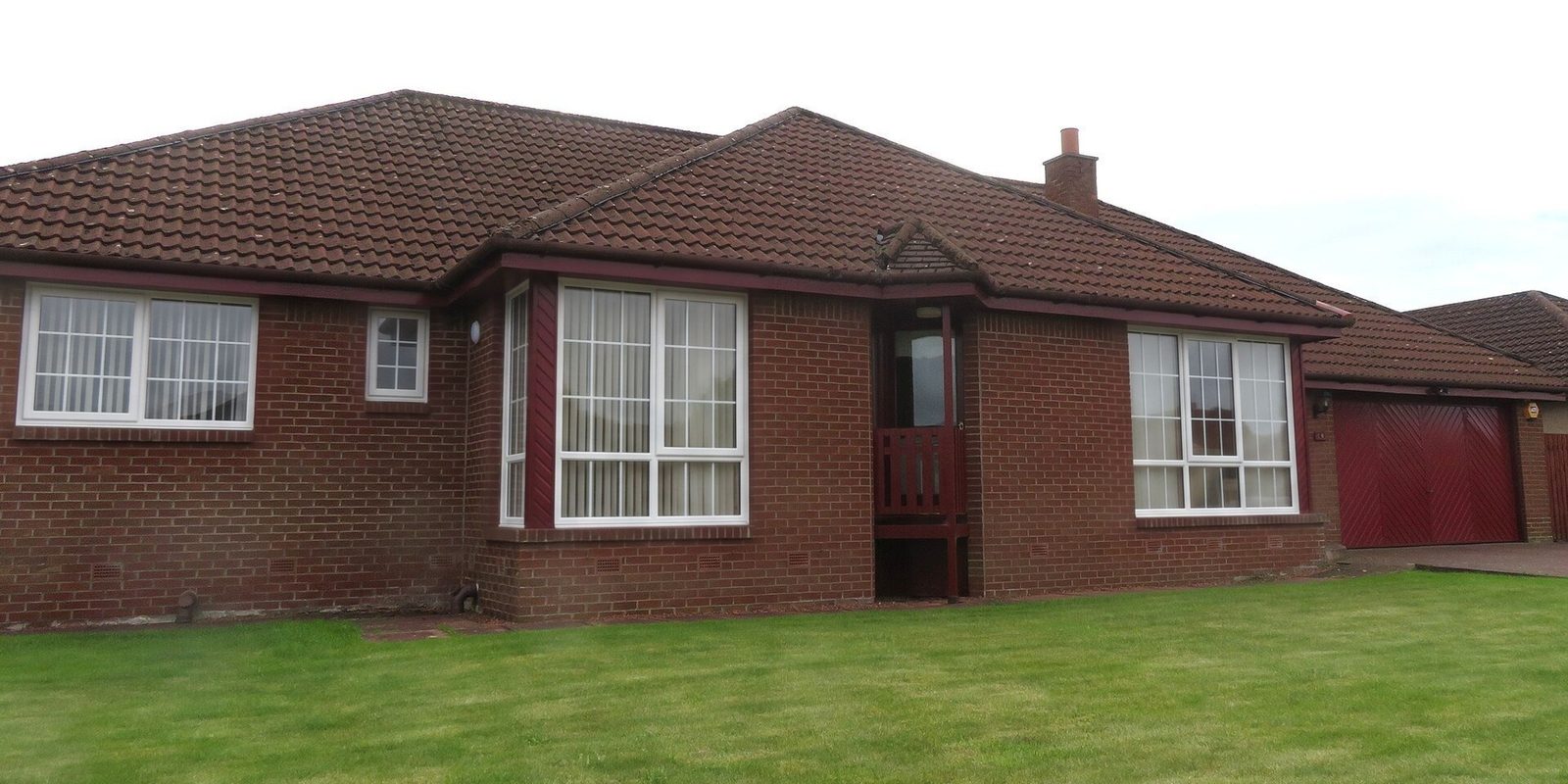
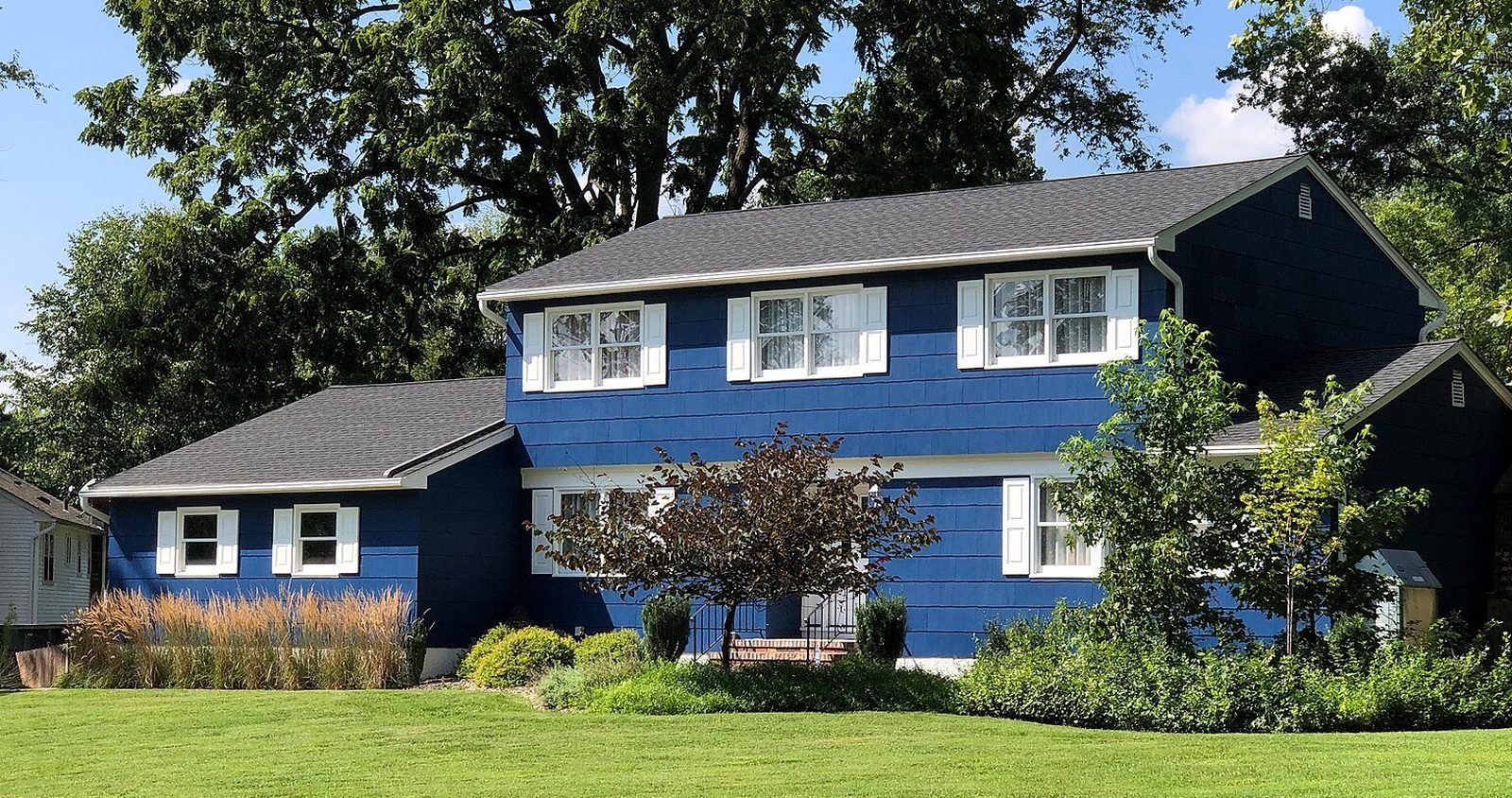
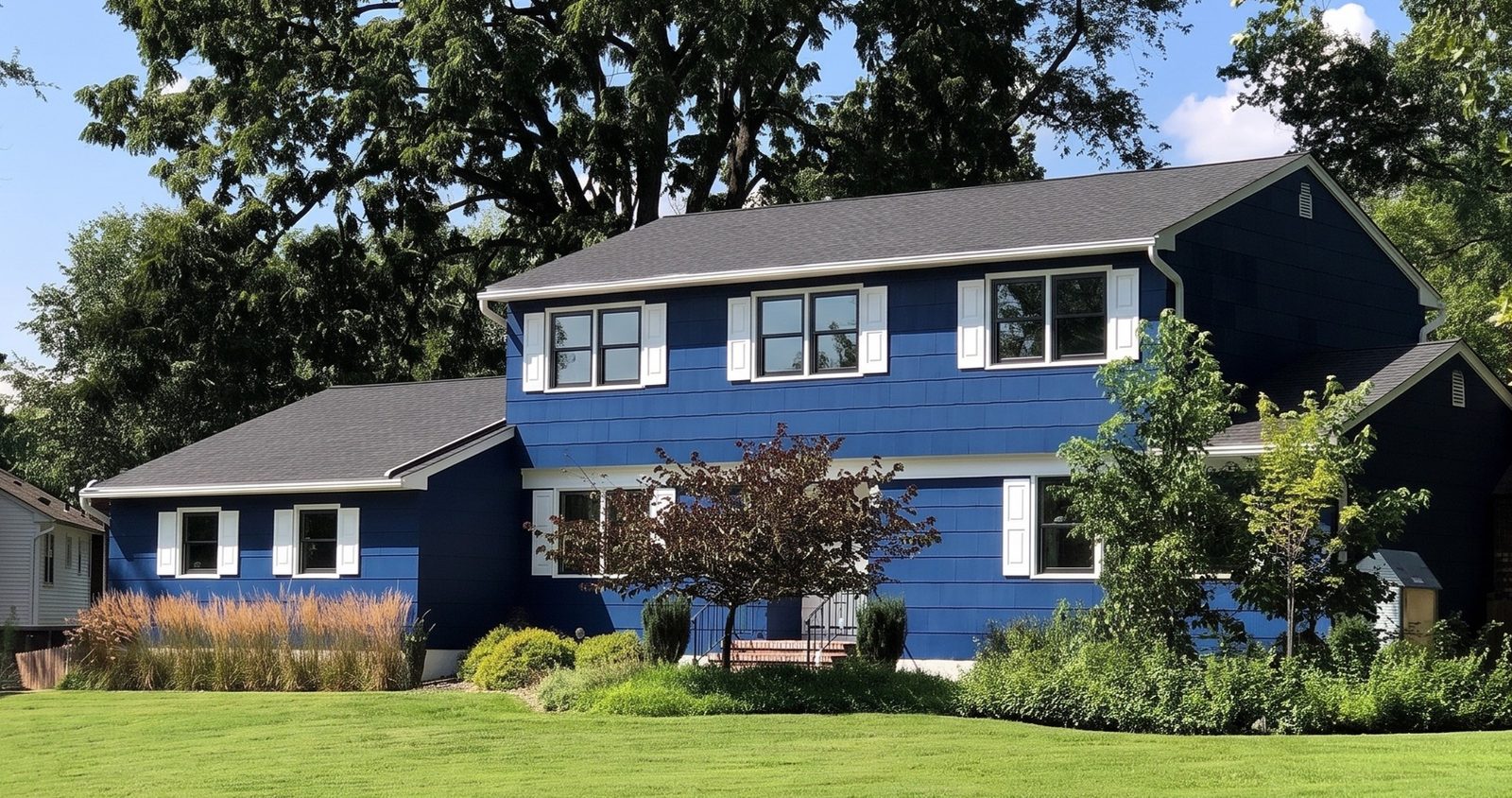
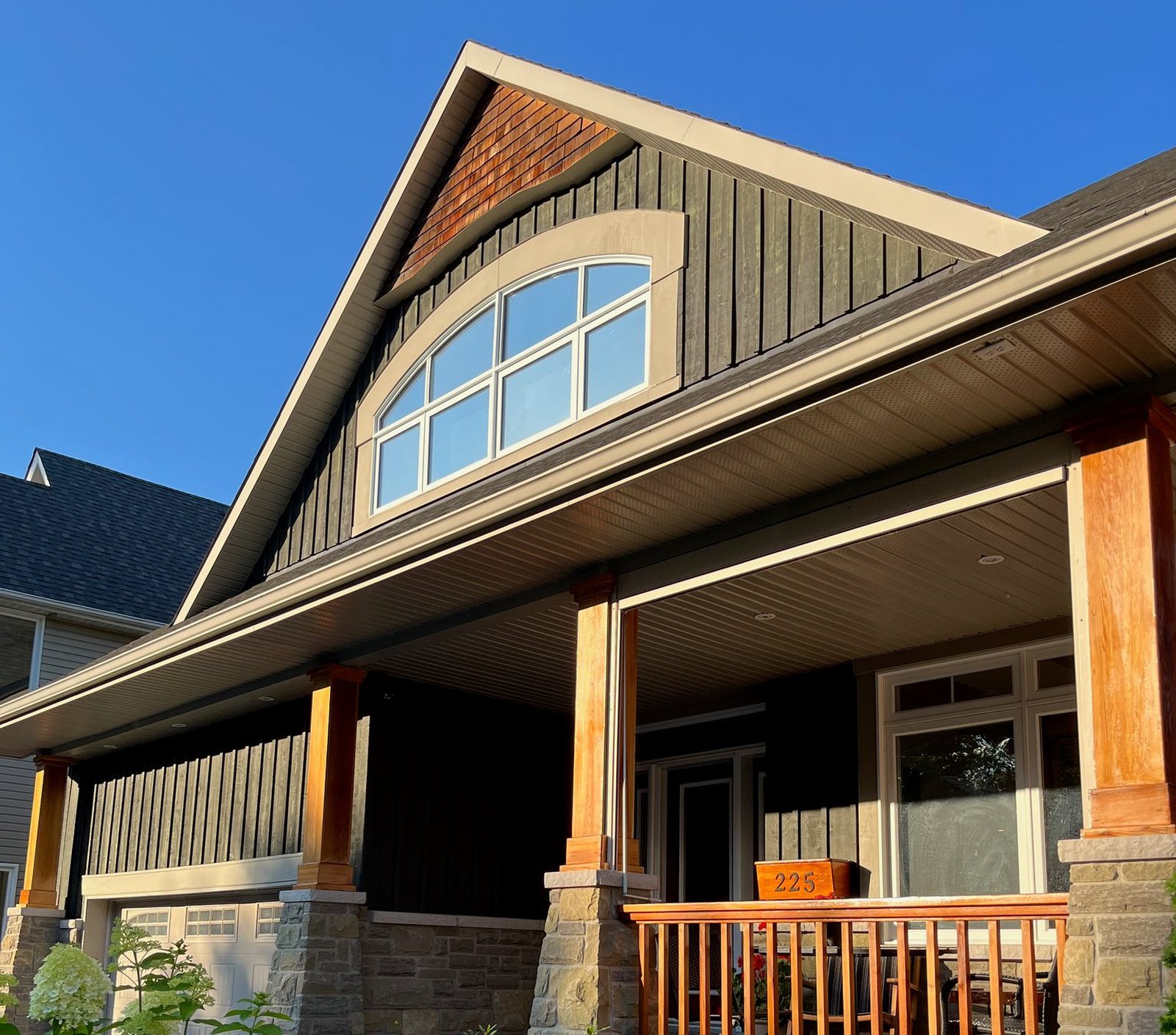
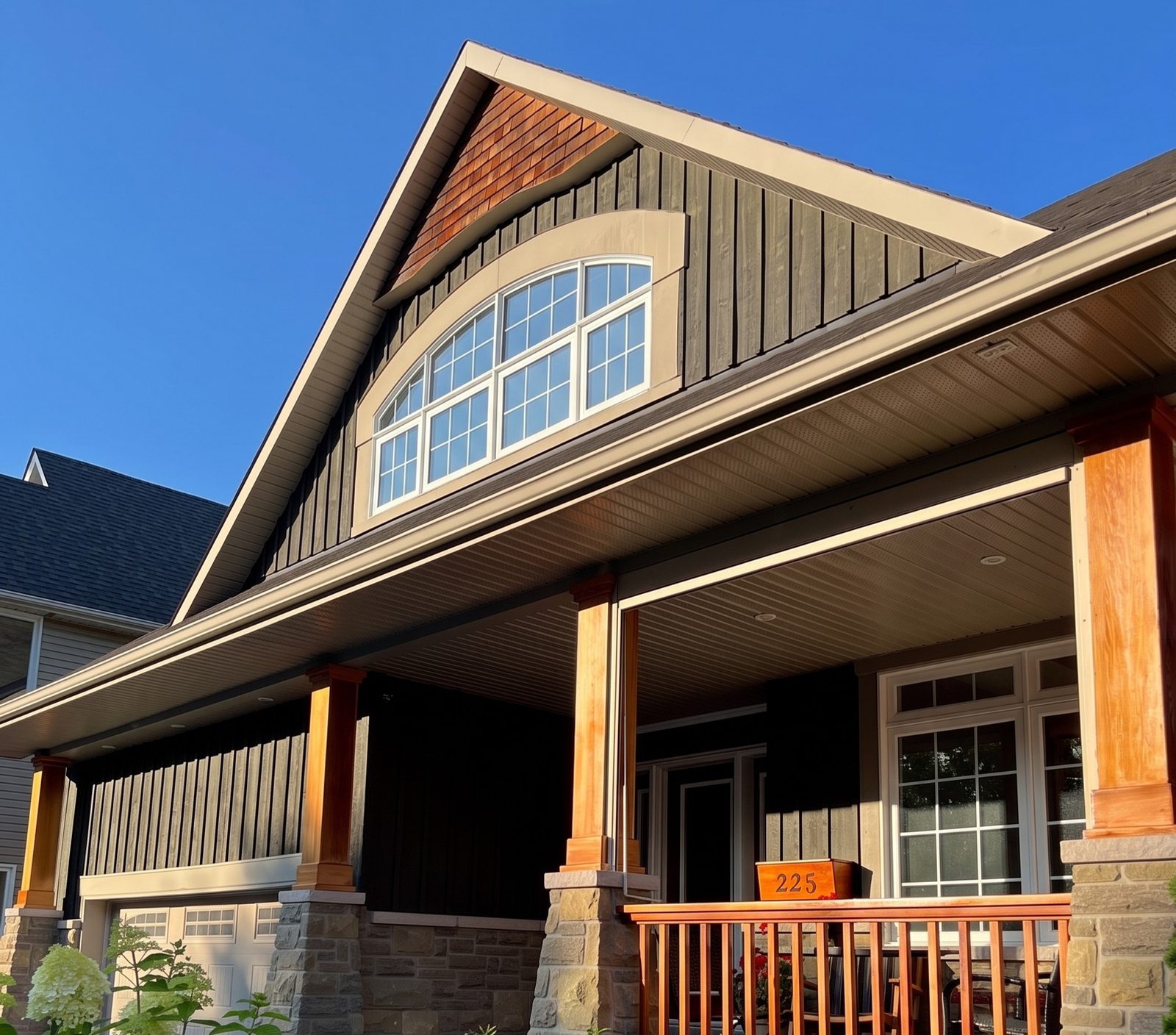
Here are two sample ads built from the renders below. The houses are real photos used under their licenses; the new windows are renders, and the label says so. Swap in your company, your towns and your offer, and use your own customers' houses once you have them.
Two sample Facebook ads built from labelled renders
Image
- Sample 1: a color change
- The blue house below, before, and a render of it with black frames
- Sample 2: grilles added
- The board and batten house below, before, and a render with white frames and colonial grids
Label on the image
- Sample 1: a color change
- Design preview (render). Not a finished install.
- Sample 2: grilles added
- Render: same house, new white grid windows
Primary text
- Sample 1: a color change
- Thinking about black windows but can't picture them on your house? Send us one photo of the front. At your free estimate we'll show you your own house in black, white or bronze before you decide anything. Serving [towns].
- Sample 2: grilles added
- Grids or no grids? It's hard to tell until you see your own house both ways. Book a free estimate and we'll show you both looks from a photo of your home. [Company], serving [towns].
Headline
- Sample 1: a color change
- See your house in black first
- Sample 2: grilles added
- See both looks before you choose
Button
- Sample 1: a color change
- Get quote
- Sample 2: grilles added
- Learn more
Form questions
- Sample 1: a color change
- Name, phone, ZIP code, and how many windows they're thinking of replacing
- Sample 2: grilles added
- Name, phone, ZIP code, and whether they own the home
| Sample 1: a color change | Sample 2: grilles added | |
|---|---|---|
| Image | The blue house below, before, and a render of it with black frames | The board and batten house below, before, and a render with white frames and colonial grids |
| Label on the image | Design preview (render). Not a finished install. | Render: same house, new white grid windows |
| Primary text | Thinking about black windows but can't picture them on your house? Send us one photo of the front. At your free estimate we'll show you your own house in black, white or bronze before you decide anything. Serving [towns]. | Grids or no grids? It's hard to tell until you see your own house both ways. Book a free estimate and we'll show you both looks from a photo of your home. [Company], serving [towns]. |
| Headline | See your house in black first | See both looks before you choose |
| Button | Get quote | Learn more |
| Form questions | Name, phone, ZIP code, and how many windows they're thinking of replacing | Name, phone, ZIP code, and whether they own the home |
How should you set up the lead form and the follow-up?
Keep the form short and add one question that sorts real projects from idle taps: how many windows, whether they own the home, or when they want the work done. Every extra field cuts the number of leads, so ask only what you'd ask on the first call anyway.
Pick the form type on purpose. Meta's Instant Forms come in a More volume type, quick to fill in on a phone, and a Higher intent type that adds a review step so people confirm their details before they send6. If too many leads don't remember filling in your form, switch to Higher intent for a few weeks and compare cost per appointment that sits, not cost per lead.
If you plan to text leads, put a clear consent line on the form and check the rules before you automate anything. This is general information, not legal advice.
Then call fast. A Facebook lead filled in your form between other things, and by tomorrow may not remember which company it was. In a study of 1.25 million leads reported in Harvard Business Review, firms that tried to reach a lead within an hour were nearly seven times as likely to qualify it as firms that waited even an hour longer7. The first-hour playbook is in speed to lead for window companies.
The first call to a Facebook lead
Hi, is this [name]? This is [your name] with [company]. You asked about new windows on Facebook a little while ago, so I wanted to catch you while it's fresh.
So I don't waste your time: which windows bother you most, and is it the whole house or a few rooms?
Here's what I'd suggest. Text me one photo of the front of the house from the street. I'll send it back with the frames you like, and when I come out you'll get a written price for each option. Does [day] or [day] work better?
Book the visit for a time when every owner can be there. If they don't pick up, send the text below.
Hi [name], it's [your name] at [company]. You asked about new windows on Facebook. Want to see your own house with new frames before anyone comes out? Text me a photo of the front.
Sure, here it is.
Thanks. Here's your house with black frames. It's a render from your photo, so it shows the look, not the exact product. Want white with grids too? I can bring both to a free estimate Thursday.
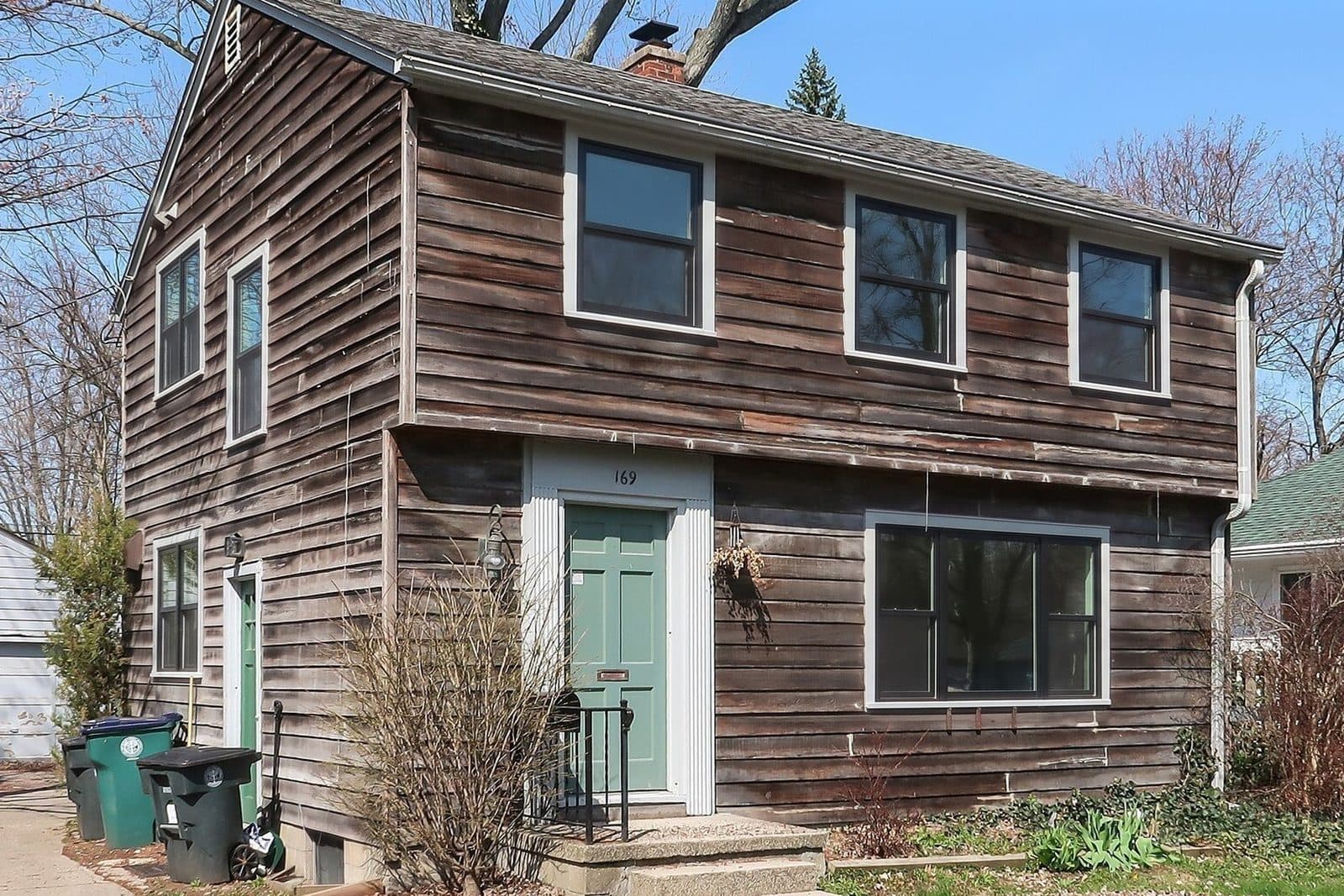 Render
Are window grant ads legal?
An ad can point homeowners to a real program. The trouble starts when it suggests you are the program, that the windows are free, or that the government is paying when it isn't. The FTC's impersonation rule makes it illegal to falsely pose as a government agency, or to misrepresent that a business is affiliated with, endorsed or sponsored by one8, and state consumer protection laws reach further. Even a grant ad where every word could be defended tends to backfire.
You've seen them: "Homeowners in [state] may qualify for a new window program," a smiling retiree, a form that asks whether you own your home. The promise of free help gets form fills. Then the lead thinks the windows are free, or paid for by the government, and your rep arrives to sell a full-price job and has to undo that at the door. That gap is where window sellers have gotten into trouble. The Washington Attorney General's Office alleged that one window seller's reps said they were only coming to do a free home energy audit; the company denied wrongdoing and agreed to limits on its marketing9. In a 2010 settlement, the same office alleged that another window seller misled customers about the purpose of its in-home visits; that company also denied wrongdoing10.
"Free" has its own rules. The FTC's guide to the word says the conditions of a free offer belong clearly at the start, and that a seller shouldn't raise the price of what must be bought to cover the free item11.
Real help exists, it just isn't yours to promise. The Department of Energy says its Weatherization Assistance Program reduces energy costs for low-income households, and that states run it through local agencies12. A window company can't sign anyone up for it. Utilities sometimes offer window rebates13. And the federal energy efficient home improvement credit, which covered qualifying windows, can't be claimed for property placed in service after December 31, 202514, so an ad promising it now is simply wrong. What to say instead is in selling windows without tax credits.
Grant-style ad lines and what to run instead
"New government program pays for your windows"
- The problem
- Suggests you are the program or work with it8, or that it covers your job
- Run this instead
- "Ask us which local rebates might apply. We'll point you to the program's own website."
"Free windows for homeowners who qualify"
- The problem
- Free with the conditions hidden in the fine print
- Run this instead
- "Free in-home estimate. Written prices, no obligation."
"Claim your window tax credit"
- The problem
- The federal credit ended for windows placed in service after 202514
- Run this instead
- Drop it, or name one current program and link to it
"Seniors: see if you qualify"
- The problem
- Sets up a qualification you don't run
- Run this instead
- Talk about the windows and the look, and let anyone book
| Ad line | The problem | Run this instead |
|---|---|---|
| "New government program pays for your windows" | Suggests you are the program or work with it8, or that it covers your job | "Ask us which local rebates might apply. We'll point you to the program's own website." |
| "Free windows for homeowners who qualify" | Free with the conditions hidden in the fine print | "Free in-home estimate. Written prices, no obligation." |
| "Claim your window tax credit" | The federal credit ended for windows placed in service after 202514 | Drop it, or name one current program and link to it |
| "Seniors: see if you qualify" | Sets up a qualification you don't run | Talk about the windows and the look, and let anyone book |
What should you check before an ad mentions a program or a grant?
- If you mention a program, name it, link to its own website, say who decides eligibility, and say plainly that you are not the program.
- Put any condition next to the offer, not in the fine print or on a second screen.
- Read your lead seller's ads before you buy their leads. Their promises arrive at your door with your rep.
- Keep a copy of every ad, its form and its landing page as they ran, with the dates.
- Brief your reps: if a homeowner says "I thought this was the government program," the rep says who they are and who they're not before anything else.
- This is general information, not legal advice. State rules on advertising and home solicitation differ, so check with your state attorney general's office and your lawyer before you run anything that mentions a program, a grant or a credit.
How do you know if your Facebook ads are working?
Not by likes, clicks or even cost per lead. A cheap lead who never answers costs more than an expensive one who buys. Elevarus, a lead seller, estimates that a $95 shared windows lead works out to about $220 to $310 per appointment that actually sits once no-shows and reschedules are counted15. Your numbers will differ, which is exactly why you track them.
Write the lead source on every lead and carry it all the way to the signed contract, then work out the five numbers in the table below for each source. The full set of numbers worth watching is in window sales metrics.
Follow every Facebook lead through to the sale
Cost per lead
- How to work it out
- Ad spend divided by forms submitted
- What it tells you
- Whether the ad gets attention. Nothing more.
Contact rate
- How to work it out
- Leads you spoke to, divided by all leads
- What it tells you
- Whether you call fast enough, and whether the form brings real people
Set rate
- How to work it out
- Appointments booked, divided by leads you spoke to
- What it tells you
- Whether the offer matched what they wanted
Sit rate
- How to work it out
- Appointments that happened with every owner there, divided by appointments booked
- What it tells you
- Whether the leads were serious
Cost per sale
- How to work it out
- Ad spend divided by jobs sold
- What it tells you
- The number to compare against every other channel
| Number | How to work it out | What it tells you |
|---|---|---|
| Cost per lead | Ad spend divided by forms submitted | Whether the ad gets attention. Nothing more. |
| Contact rate | Leads you spoke to, divided by all leads | Whether you call fast enough, and whether the form brings real people |
| Set rate | Appointments booked, divided by leads you spoke to | Whether the offer matched what they wanted |
| Sit rate | Appointments that happened with every owner there, divided by appointments booked | Whether the leads were serious |
| Cost per sale | Ad spend divided by jobs sold | The number to compare against every other channel |
What mistakes waste Facebook ad money for window companies?
Most of the waste comes from a few habits. Check your account against this list before you raise the budget.
- Boosting posts instead of running lead ads with a clear offer and a set area.
- Drawing the map so wide you pay for leads you won't drive to.
- Letting forms sit overnight.
- Running one image for months after everyone in your towns has seen it.
- Changing the image, the offer and the audience at once, so you never learn which one worked.
- Turning off the ad with the higher cost per lead when it's the one that sells jobs.
- Posting a render without a label, or one anyone could take for a house you worked on.
Where the render fits in a Facebook campaign
In the first reply to a new lead. Ask for one photo of the front of the house and send back a render of it with the look they asked about, labelled as a render. A lead who has seen their own house with black frames has a concrete reason to keep the appointment, and your first text has something in it worth opening.
At the table, render their second choice from the same photo before you show the price. In the ad itself, a labelled render can show the kind of change you sell while you build a library of real before and after pictures from your own jobs. Swap those in as they come: a finished job beats a render in an ad.