Does direct mail still work for window companies?
It can, and it's one of the few channels where you pick the houses instead of the people. Replacement windows are bought because of the house: its age, its drafts, its peeling frames. Mail lets you choose the streets where those houses are and skip the ones where they aren't.
What nobody can tell you is how well it will work for you. We couldn't find any public response-rate data for window company mail. Printers and list brokers quote averages across all kinds of businesses; ask where theirs come from and whether they split out home improvement. Treat any number as a starting guess, then run a small test with your own list, offer and phone.
Mail is also slow and paid up front, so it fits best alongside channels that work faster. For how it stacks up against search ads, social ads and bought leads, see window replacement leads.
Who should a window company mail?
Start with people who already know you and work outward. The closer a list is to a past job, the less each card has to explain.
Whatever the list, take out apartments, brand-new houses and anyone outside your service area. A card to a house you can't sell goes straight in the recycling. If you do want multifamily work, that's a different pitch, covered in selling windows to property managers.
Mailing lists for a window company, warmest first
Unsold quotes
- Who's on it
- Homeowners who had a visit and didn't buy
- Why mail them
- They already have your price and know your name
- Watch out for
- Send something new, like a render of the look they liked, not the same pitch again
Past customers
- Who's on it
- Everyone you've installed for
- Why mail them
- Doors, more windows, and their friends
- Watch out for
- Keep it to a thank-you and the referral program
Install neighbors
- Who's on it
- The houses around each job, mailed the week of the install
- Why mail them
- They just watched your crew work
- Watch out for
- Mention the customer's house only with their OK
Every door on a route
- Who's on it
- Each address on the carrier routes you pick
- Why mail them
- No list to buy: USPS says Every Door Direct Mail needs no names or addresses1
- Watch out for
- You also pay to reach renters and newer houses
A bought prospect list
- Who's on it
- Homes picked by year built, ownership and value
- Why mail them
- It aims at houses old enough to need windows
- Watch out for
- Ask the broker how fresh the data is, and drop renters
| List | Who's on it | Why mail them | Watch out for |
|---|---|---|---|
| Unsold quotes | Homeowners who had a visit and didn't buy | They already have your price and know your name | Send something new, like a render of the look they liked, not the same pitch again |
| Past customers | Everyone you've installed for | Doors, more windows, and their friends | Keep it to a thank-you and the referral program |
| Install neighbors | The houses around each job, mailed the week of the install | They just watched your crew work | Mention the customer's house only with their OK |
| Every door on a route | Each address on the carrier routes you pick | No list to buy: USPS says Every Door Direct Mail needs no names or addresses1 | You also pay to reach renters and newer houses |
| A bought prospect list | Homes picked by year built, ownership and value | It aims at houses old enough to need windows | Ask the broker how fresh the data is, and drop renters |
What should a window company postcard say?
One idea per card. It gets a glance between the mailbox and the kitchen counter, so it has to say who you are, what you'd like the reader to do, and why now.
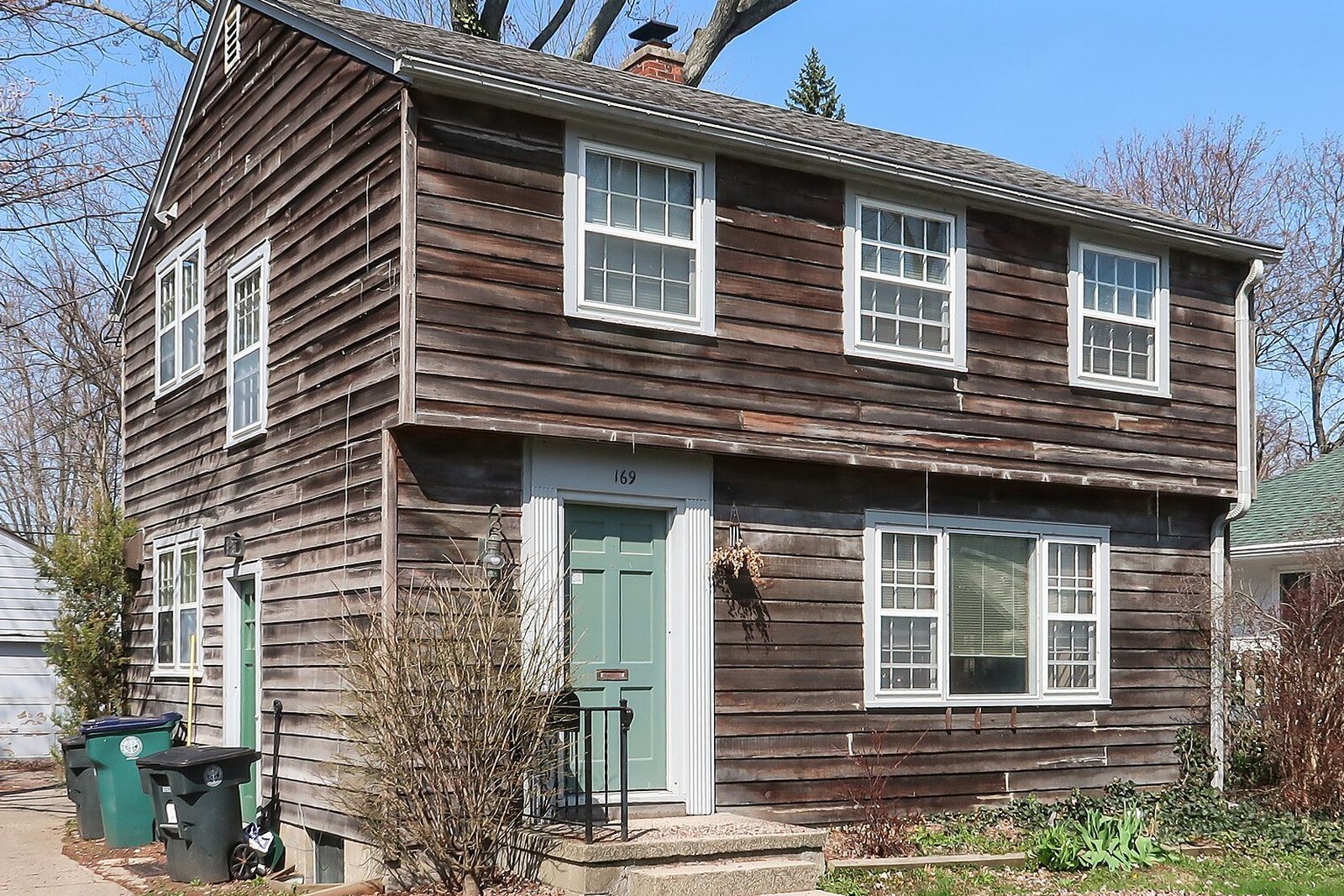
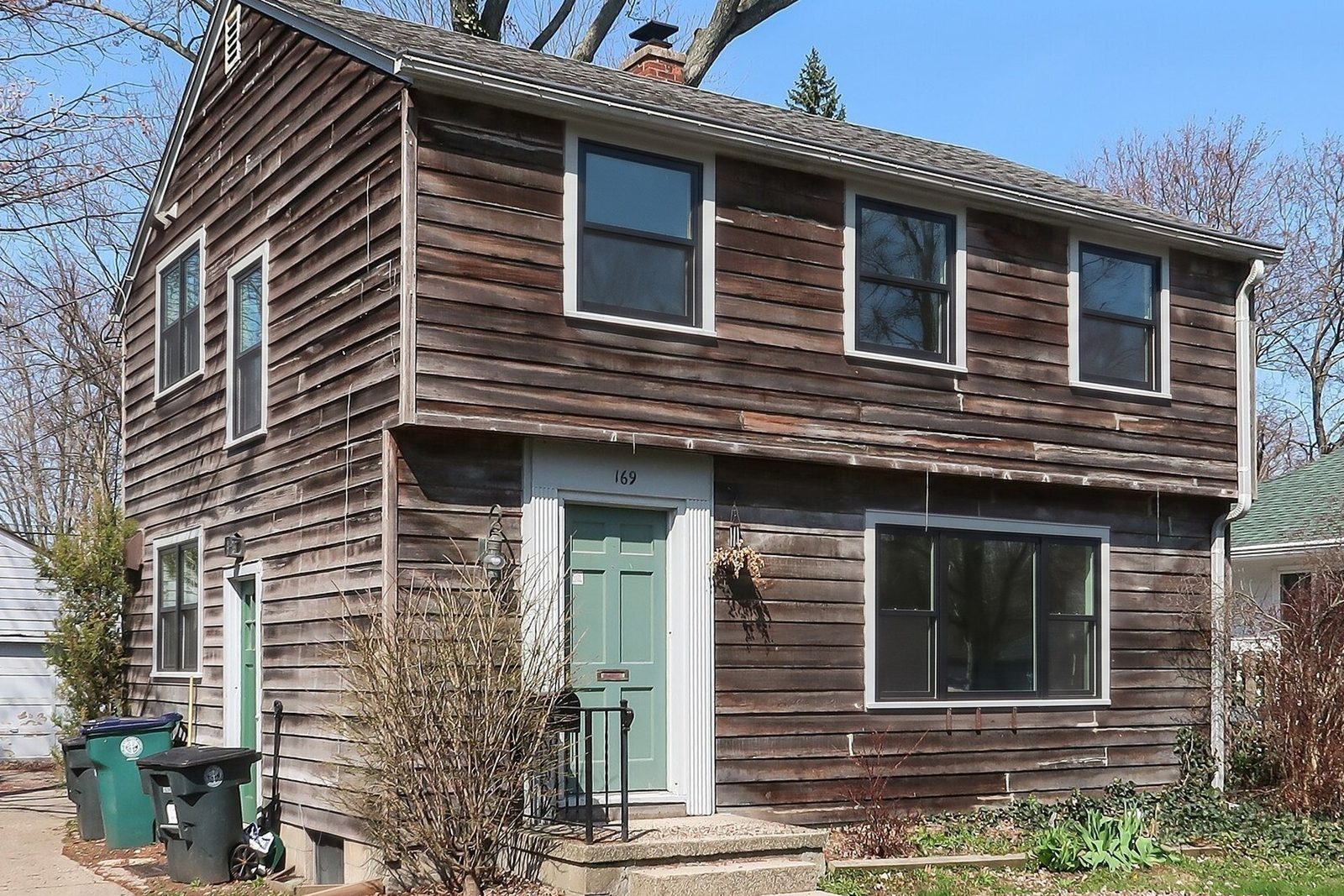
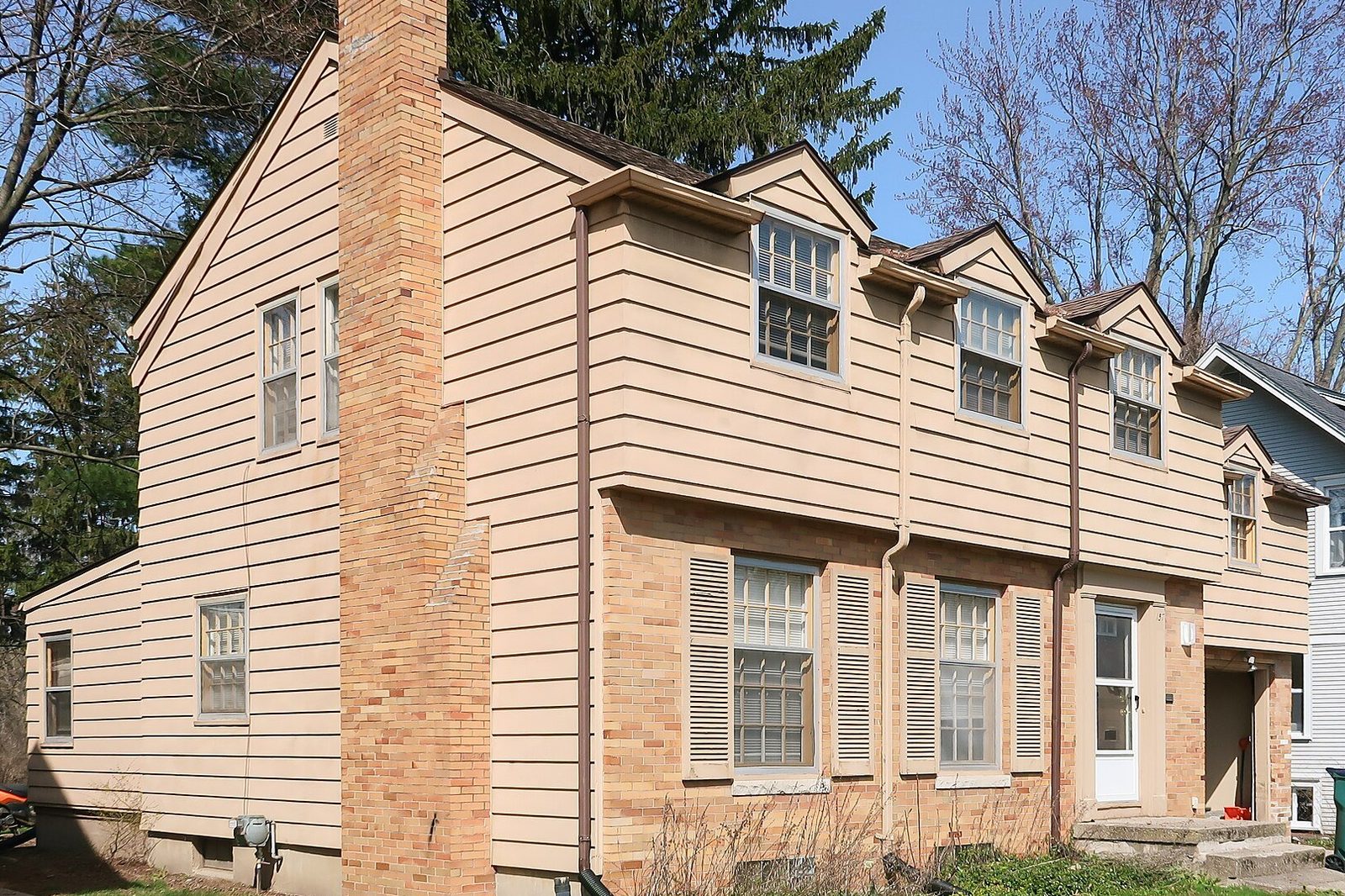
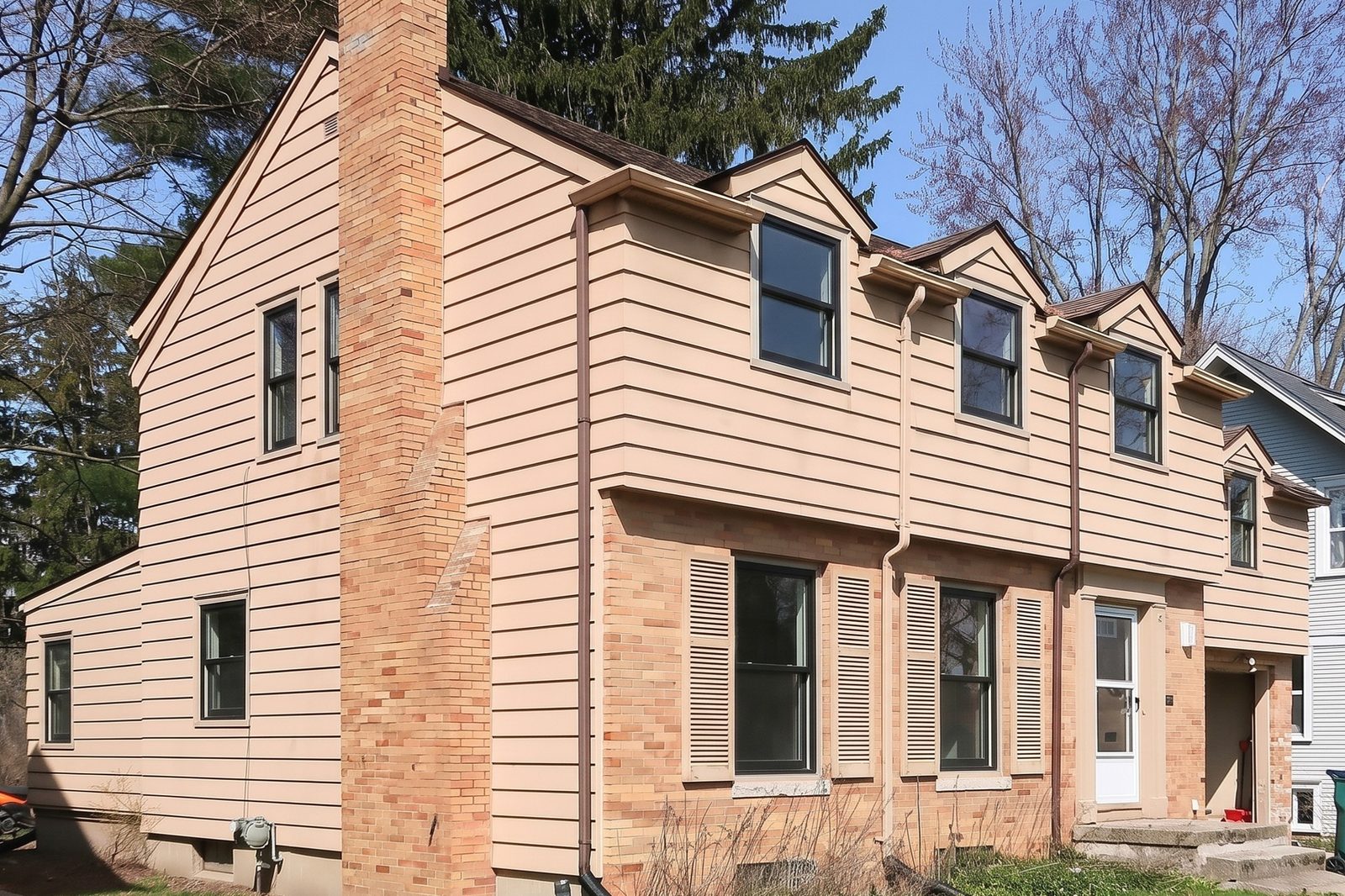
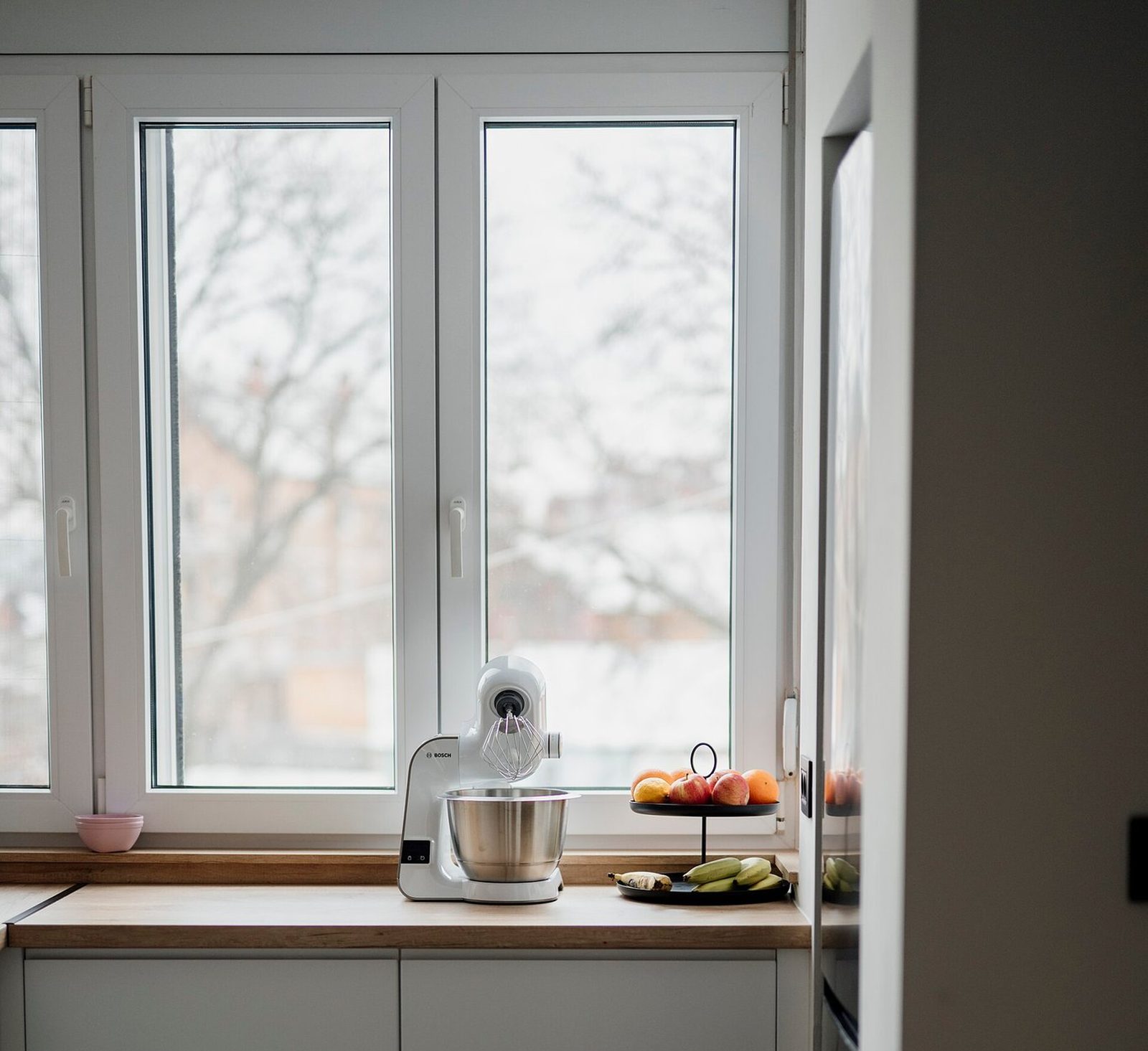
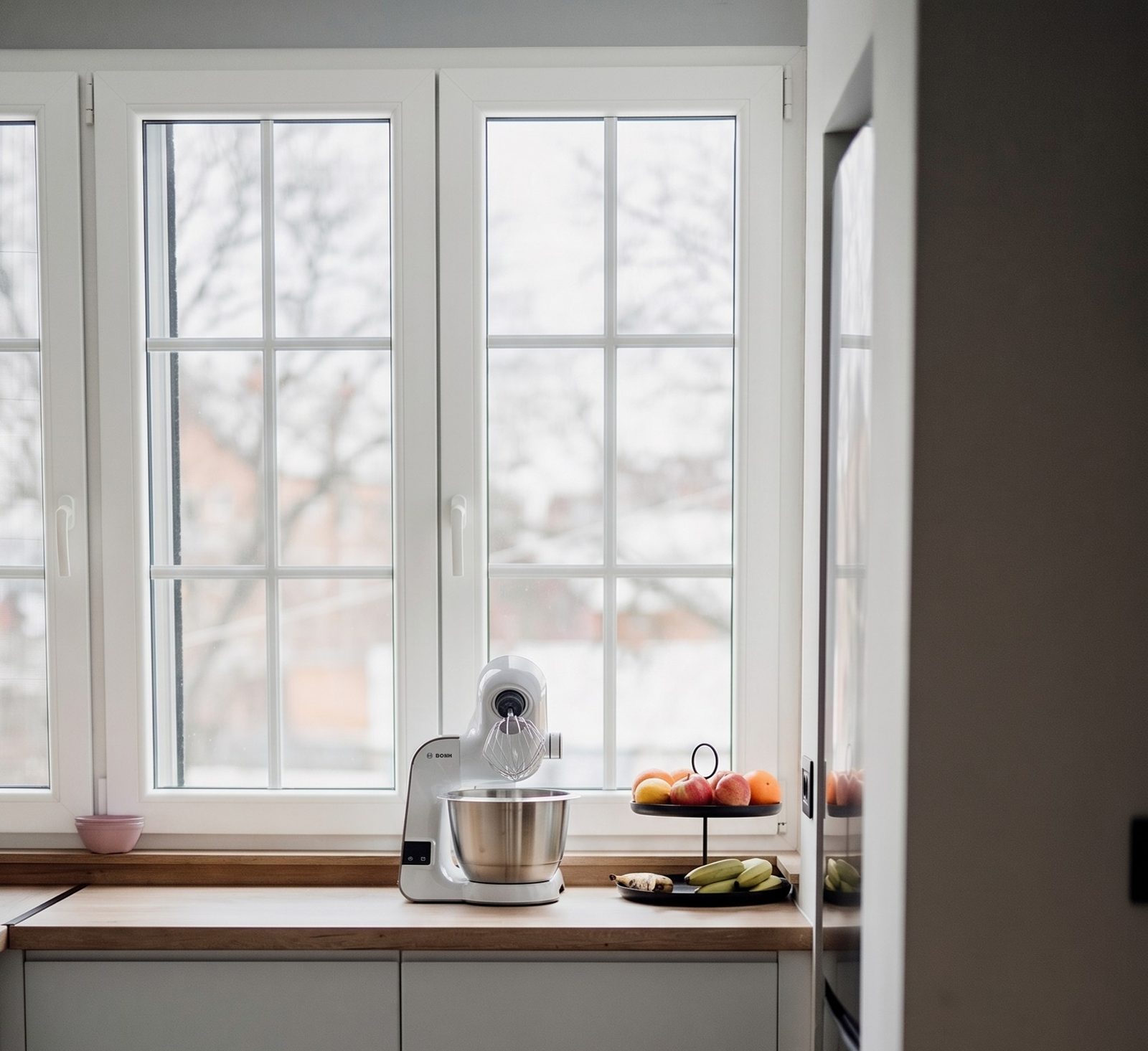
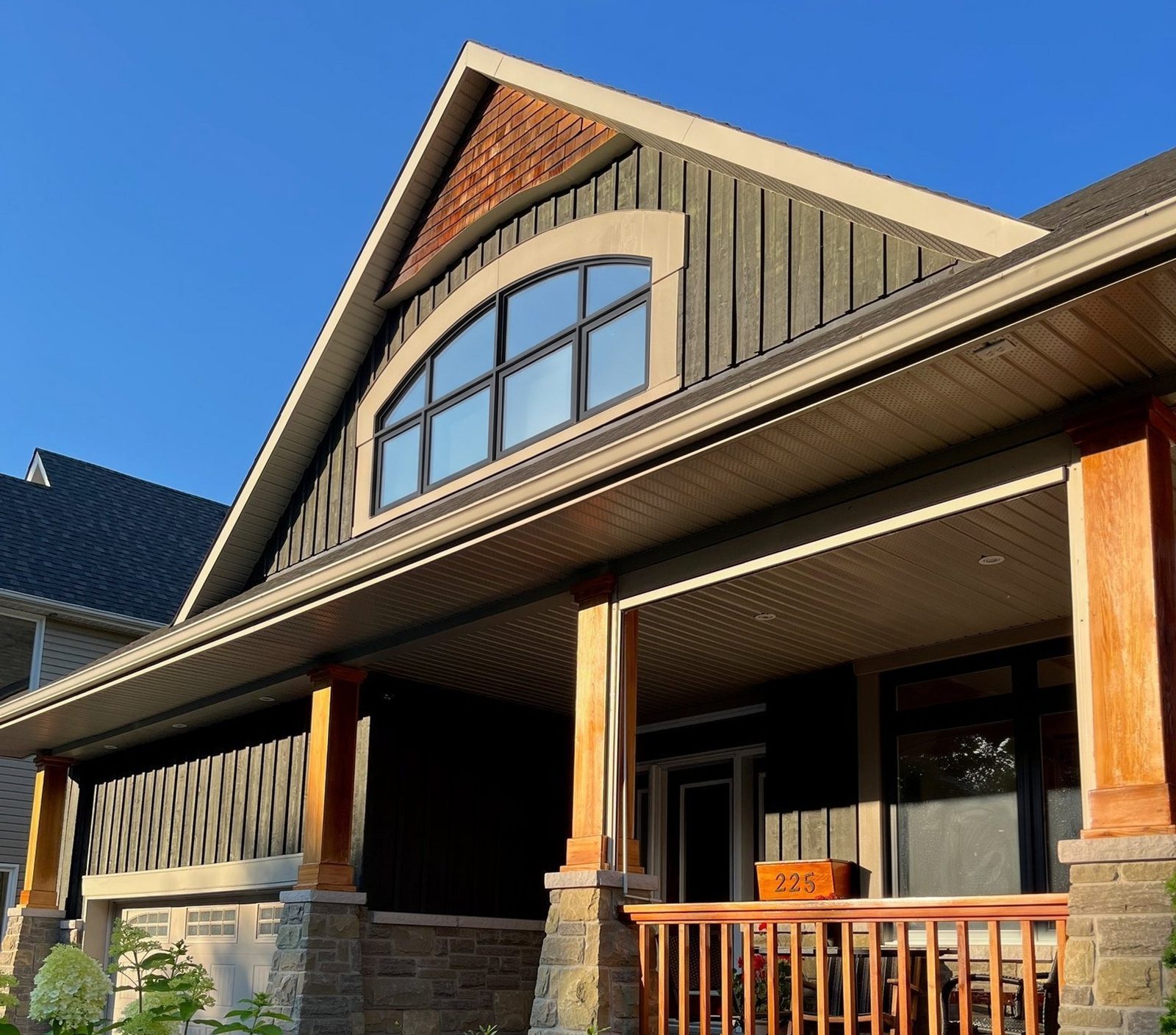
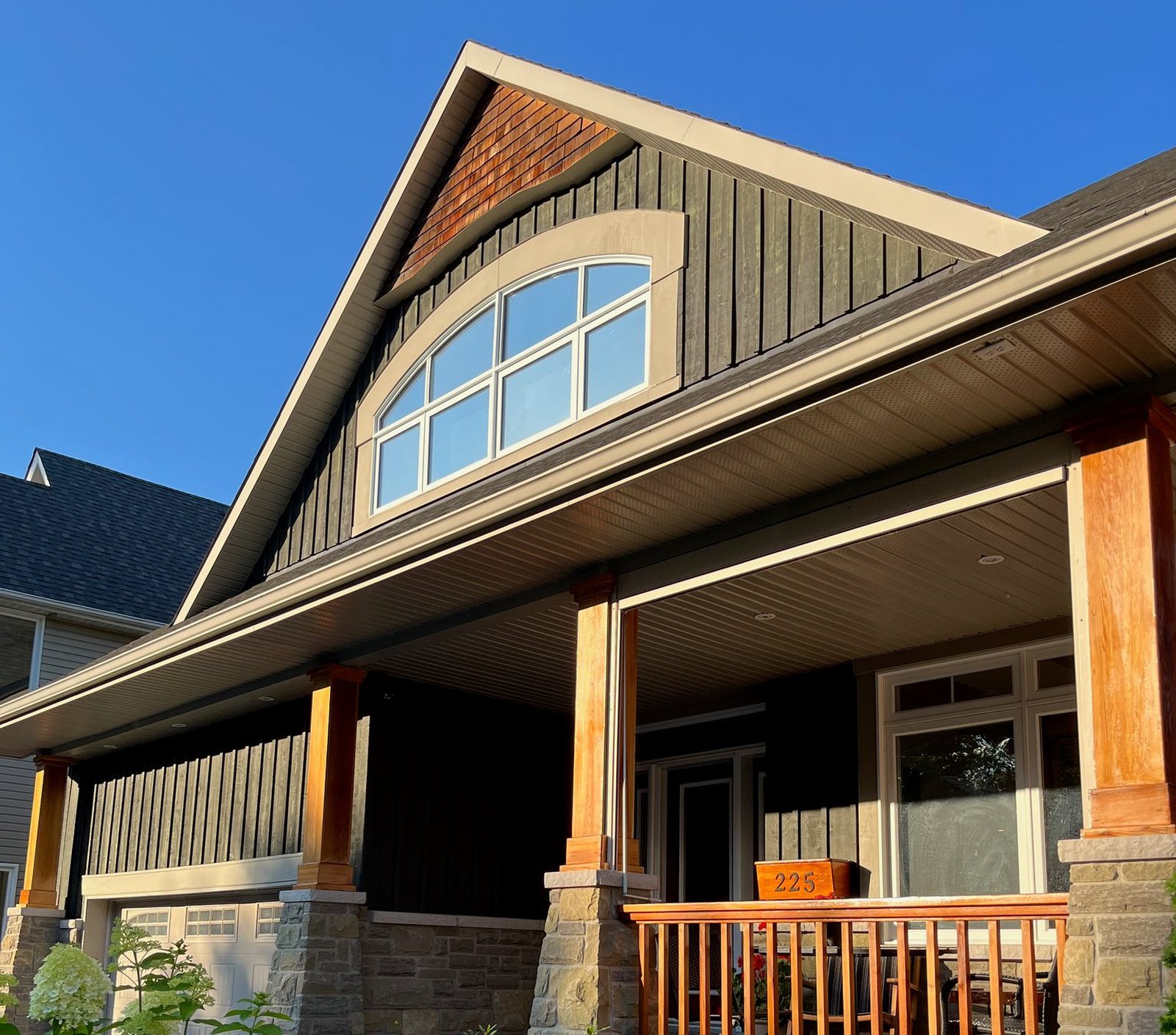
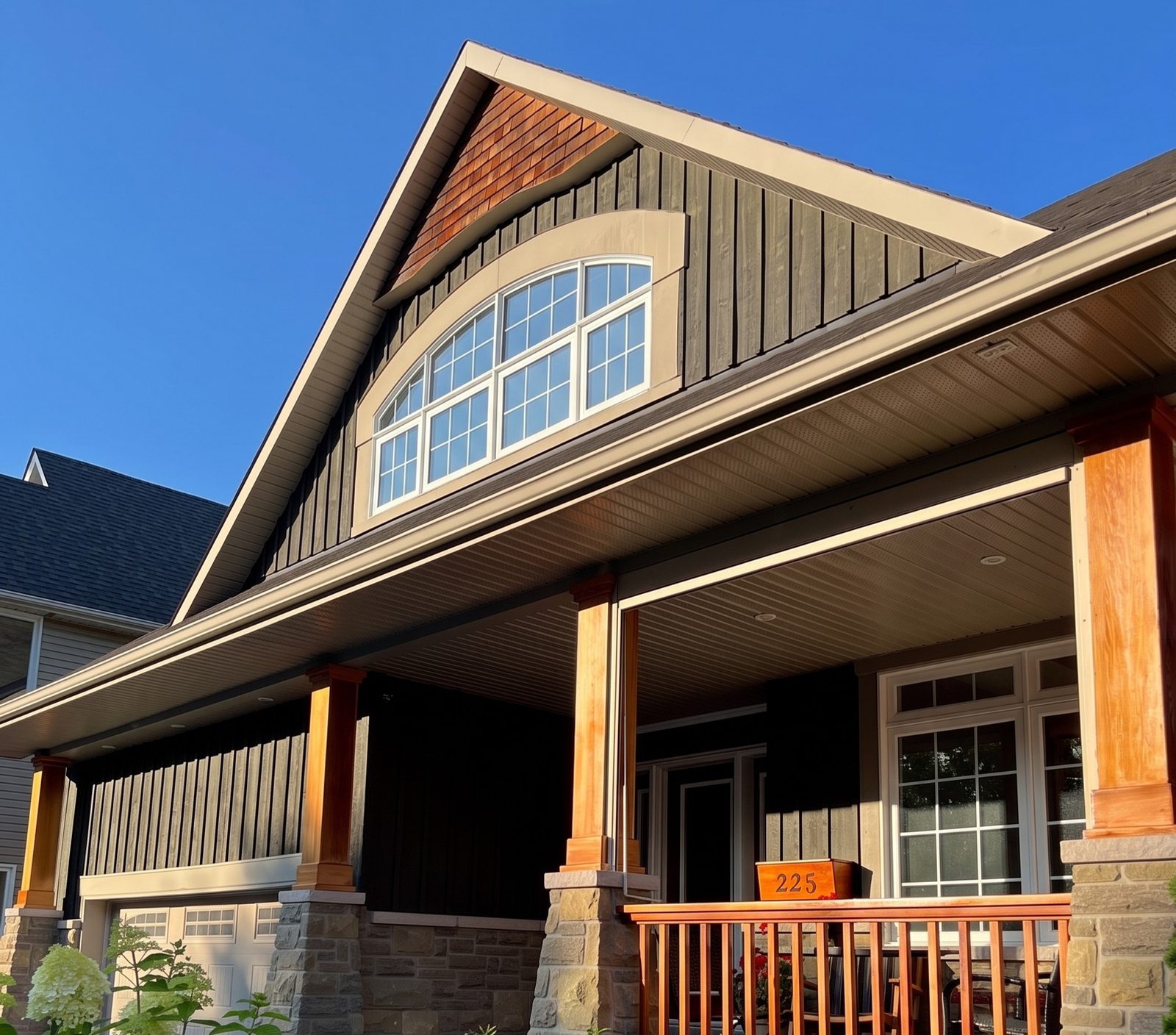
Here's the kind of picture we mean: a real photo of a house next to a render of the same house, here with white frames and colonial grids. Pick a house that looks like the ones on the route, use one you have permission to show, and print "Sample render" on the image.
- A headline about their house, not your company: "What would your house look like with black windows?"
- One offer, stated honestly. If you say "free," spell out any conditions up front and don't raise the price to cover it2. A "was" price has to be one you really charged for a real stretch of time3.
- One way to respond, plus a backup: a phone number a person answers, and a QR code or short web address.
- A tracking code in the corner, different for every list and every card.
- Your license number where your state requires it in advertising. California does4; check your own state's licensing board.
- No energy-savings promise you can't prove. FTC staff warned window makers in 2012 about unsupported claims such as cutting heating and cooling costs by more than 30%5. Leave savings figures off unless you have the evidence.
Postcard copy: the sample render card
Front: Same house. New windows. [Photo and render side by side, labelled "Real photo" and "Sample render."]
Back headline: Wondering what your house would look like with new windows?
Back body: Text a photo of the front of your house to [number], tell us the color you're curious about, and we'll send it back with new windows on it before anyone visits. Or call [number] for a written quote. [Company], [town], license [number].
Corner: [code], for example NB2 for the second card to install neighbors.
Make the sample from a photo you have permission to use. Never present a render as a finished job.
How often should a window company mail the same homes?
More than once. A single card has to land in the one week someone is thinking about windows; a series gives you several chances at that week. Plan three or four cards to the same list a few weeks apart, each with something new, and take anyone who asks off the list right away.
Time the series so the cards arrive before the seasons when people notice their windows: ahead of the first cold weather, and in early spring. For the cold-weather pitch, see selling windows in winter. Ask your printer for mail dates and local delivery times, and make sure someone is free to answer the phone the week the cards land.
A four-card series to one list
1. The look
- When
- Week 1
- What it says
- A labelled sample render on the front, the photo offer on the back.
2. The reason
- When
- About three weeks later
- What it says
- Drafts, fogged glass, sashes that stick: problems they already notice, and what a visit includes.
3. The offer
- When
- About three weeks after that
- What it says
- A real offer with a real end date, and the reason for the date.
4. The last card
- When
- About three weeks later
- What it says
- A short reminder and the photo offer again. Then rest the list.
| Card | When | What it says |
|---|---|---|
| 1. The look | Week 1 | A labelled sample render on the front, the photo offer on the back. |
| 2. The reason | About three weeks later | Drafts, fogged glass, sashes that stick: problems they already notice, and what a visit includes. |
| 3. The offer | About three weeks after that | A real offer with a real end date, and the reason for the date. |
| 4. The last card | About three weeks later | A short reminder and the photo offer again. Then rest the list. |
How do you track direct mail for a window company?
Give every list and every card its own code, then make sure the code comes back. Use a different phone number or extension per list, a different short web address or QR code per card, and one question on every call: "What's the code in the corner of the card?" Write it in the lead's record before anything else.
Then judge each list by what it costs per appointment and per sale, the same way you'd judge paid leads. LocaliQ's 2025 benchmarks put a doors and windows search-ad lead at $200.346. A mailing that books appointments for less than your ads do, and closes them, earns the next drop.
Answer fast when a card works. In the study of lead response reported in Harvard Business Review, firms that reached out within an hour were nearly seven times as likely to qualify a lead as firms that waited even an hour longer7. Responses also trickle in late, because cards sit on fridges, so keep counting each code for a few months before you judge a list.
What to count for each mailing
Cost of the drop
- How to get it
- Design, printing, the list and postage for that list
Responses
- How to get it
- Calls, texts, QR scans and web forms that carry that code
Appointments that sat
- How to get it
- Visits that actually happened, from those responses
Sales and revenue
- How to get it
- Signed orders with that code, counted for a few months
Cost per appointment and per sale
- How to get it
- Cost of the drop divided by appointments, then by sales
| Number | How to get it |
|---|---|
| Cost of the drop | Design, printing, the list and postage for that list |
| Responses | Calls, texts, QR scans and web forms that carry that code |
| Appointments that sat | Visits that actually happened, from those responses |
| Sales and revenue | Signed orders with that code, counted for a few months |
| Cost per appointment and per sale | Cost of the drop divided by appointments, then by sales |
What mistakes waste a window company's mail budget?
- Mailing once and calling it a test. One card tells you almost nothing about a list.
- No tracking code, so every caller says "I saw you somewhere."
- Mailing houses you can't sell: renters, new builds, towns you don't serve.
- A render on the card with no label, or captioned as your work. It's a preview of a look, never an installed job. Say so on the image.
- Showing a customer's house or address without a written OK.
- Fake deadlines and made-up regular prices. A former price has to be real3, and any claim on the card has to be truthful and backed by evidence8.
- Treating the mailing list as permission to call or text. It isn't; see the questions below.
- Cards landing in a week when nobody can answer the phone.
Where the render fits in direct mail
On the card, and again when someone answers it. On the front, a labelled sample render of a house like the ones on the route shows what you do more plainly than a list of products. On the back, the strongest call to action you can print is an offer to do the same for their house: "Text us a photo and we'll send it back with new windows." It's a small step, it costs the homeowner nothing, and it brings you their number and their house.
When the photo comes in, render the look they asked for in 30 seconds and text it back with an offer to measure. At the visit, start from that render and show their second choice from the same photo. The postcard gets the photo; the render gets the appointment.
Keep it honest. Each window keeps its current style; the render shows a new frame color, material and grilles, and it's always labelled as a render.